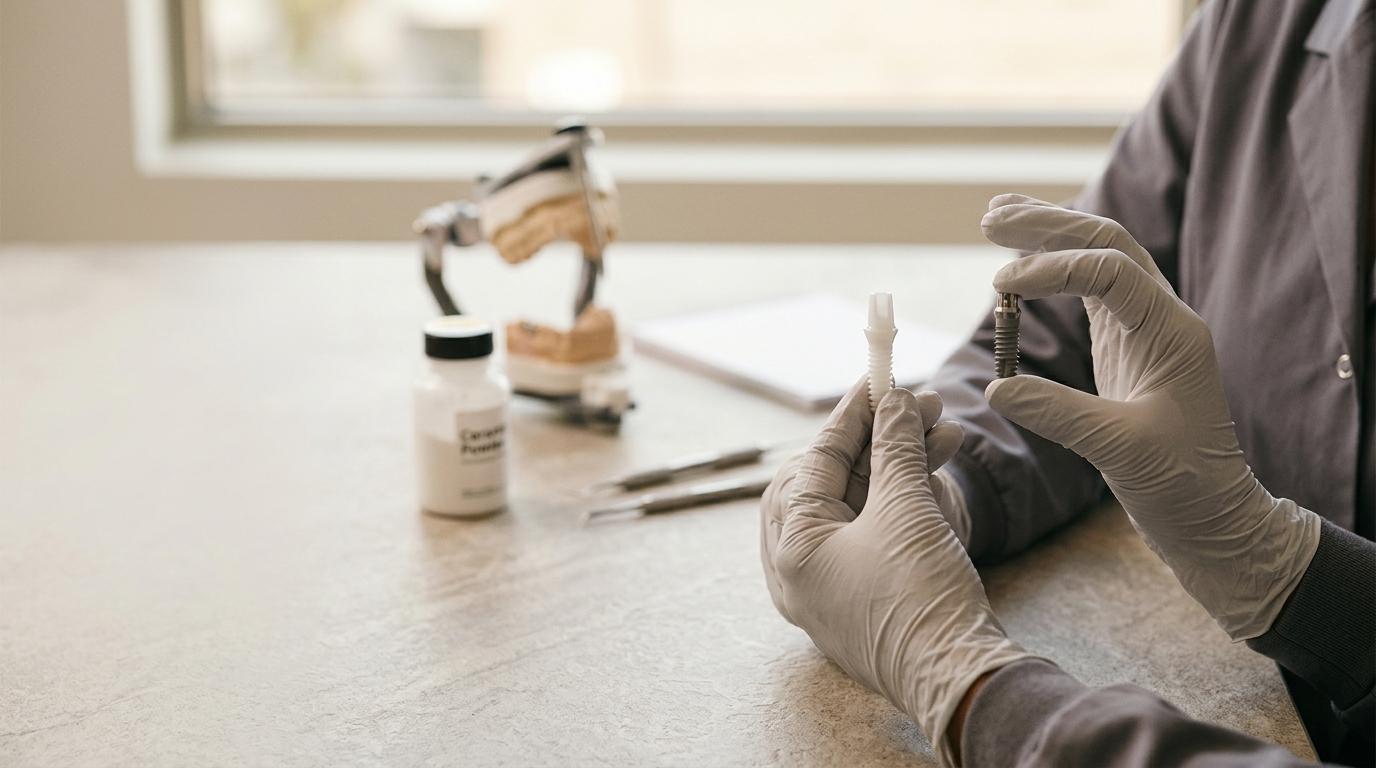
All-on-4 recovery runs on two tracks at once: a short, uncomfortable phase of swelling and soft food that lasts roughly one to two weeks, and a much slower background process called osseointegration, where the jawbone fuses to the implants over three to six months. You leave surgery with a temporary fixed bridge, not a gap, and swap it for the final bridge once scans confirm the implants have properly integrated. How fast any of this happens depends on your bone quality, whether you smoke, and your general health.
What happens on surgery day, and what is the temporary bridge?
On the day itself, any remaining teeth in the arch are usually removed, four (sometimes more) implants are placed into the jawbone, and a temporary fixed bridge is attached before you leave - so you're not sent home toothless. Instead of placing an implant for every single tooth, your dentist uses just four implants to support a full set of prosthetic teeth, and temporary teeth are attached the same day, giving you a new smile instantly.
Most Perth clinics offer a choice of local anaesthetic, IV sedation or general anaesthetic for this surgery, and the right option depends on your anxiety level, how much work is being done, and your medical history - our guide to sedation options in Perth compares them in detail. If several teeth need to come out first, it's worth understanding what that part of the day involves too - see our piece on multiple tooth extraction. You'll go home with someone to drive you, numbness that takes several hours to wear off, and instructions on medication, ice and rest. For the full step-by-step of the procedure itself and realistic cost ranges, see our main guide to All-on-4 dental implants in Perth.
What does the first week actually feel like?
The first few days are the hardest part. Most patients describe it as far less painful than expected, more pressure and soreness than sharp pain, with swelling peaking around 48 to 72 hours and then subsiding, managed well with over-the-counter or prescribed pain medication for the first few days.
During this week you'll stick to a liquid-to-soft diet - think smoothies, soup, mashed potato, yoghurt and scrambled egg - and avoid straws, hot food and anything requiring chewing near the bridge. Applying a cold compress to the outside of your face during the first 48 hours reduces puffiness, and sticking to soft foods such as yoghurt, mashed potatoes, scrambled eggs and smoothies for the first two weeks is recommended. Gentle saltwater rinsing usually starts after the first 24 hours rather than straight away, so you don't disturb the healing tissue. Many people take three to five days off work, though some desk-based roles manage sooner - it really depends on the job and how you feel.
Weeks two to six: what's healing, and what can still go wrong?
By the second week, swelling has usually dropped and the gums look pink and settled again - but that appearance can be misleading. By the second week, most patients feel good enough to return to office-based work, and their gums will appear pink and healthy again, however, the implants are currently in a delicate state - while the surface looks healed, the bone hasn't fully fused yet.
This is the stage where overconfidence is the real risk. You can gradually move to slightly firmer soft foods - well-cooked pasta, soft fish, cottage cheese - but hard, crunchy or chewy food is still off the table, and biting down hard on the new bridge can disturb the implants before they've stabilised. Your temporary prosthetic teeth may need adjustments as your gums settle and change shape, and some mild tenderness when pressing on the gums is common, especially in the morning when jaw tightness can occur. Keep brushing gently and attending any review appointments the clinic books in.
Why does the three-to-six month osseointegration wait matter?
This is the part with no shortcut. Osseointegration is the process where the titanium implants physically fuse with your jawbone, becoming a permanent anchor, and it happens beneath the surface over three to six months. You won't feel it happening day to day, and you'll be living normally on your temporary bridge the whole time - but the bone is doing real work underneath.
Timelines aren't identical for everyone, and some clinicians note a difference between jaws: for lower jaw All-on-4 cases, osseointegration is typically complete by 3 months, while for upper jaw cases it takes about 4 months due to the softer upper jaw bone. This is a general pattern, not a promise - some people need longer, especially if grafting was involved. The timeline varies based on your bone quality, your overall health, and habits like smoking, which is why the range spans a few months rather than a fixed date. There's genuinely very little you need to "do" during this stretch beyond protecting the bridge, keeping up gentle hygiene and not smoking.
What happens when you get the final fixed bridge?
Once scans confirm the implants have integrated, the temporary bridge comes off and the final one goes on. Once bone integration is complete, you'll switch from temporary teeth to your custom final prosthesis - these permanent prosthetic teeth are stronger and look more natural than your temporaries, the transition appointment is usually straightforward, your dentist removes the temporary prosthesis and attaches your final teeth, and you might need minor adjustments to get the fit and bite just right.
If a fixed bridge isn't the right fit for your situation, or you'd prefer something removable that still clips onto implants, it's worth reading about implant-retained dentures as an alternative worth discussing at your consult.
What warning signs mean you should call the clinic?
Most recoveries are uneventful, but a few signs shouldn't be waited out:
- Pain or swelling that gets worse after day three or four instead of easing off
- Fever, pus, or a persistent bad taste or smell from the surgical site
- The temporary bridge feeling loose, rocking, or coming away from the implants
- Numbness that lingers well beyond the first day
- Bleeding that won't settle with firm pressure
A few signs warrant a prompt call to your surgical team, including severe pain that worsens after the first few days instead of improving, and swelling that increases after day three or four rather than going down. If extraction sites elsewhere in the mouth become sharply painful a few days in, that can point to dry socket rather than an implant issue - our guide to dry socket symptoms and treatment explains what to look for. Either way, ring the clinic rather than guessing - they'd rather see you early.
What affects how long your recovery actually takes?
No two patients heal on exactly the same schedule, and clinics are generally upfront about this. Bone density matters - if you had high bone density to begin with, implants might stabilise faster, while bone grafting can extend total recovery by a month or two; age isn't a barrier, but slower metabolic rates can mean a slightly longer osseointegration period; and conditions like controlled diabetes or autoimmune disorders can influence healing speed.
Smoking deserves its own mention, because it's the one factor most within your control. Smoking can ruin recovery because nicotine constricts blood vessels, starving the surgical site of the oxygen and nutrients it needs to heal, and statistics show smokers have a significantly higher risk of implant failure. None of this is a guaranteed outcome either way - it's simply why your dentist will ask about these factors before giving you any timeline.
What does All-on-4 cost in Perth, and how does that relate to recovery?
Cost varies with the implant system used, whether bone grafting is needed, and which lab makes the bridge, so any figure you see online should be treated as a guide only - a written quote follows a proper exam and scan. Fee surveys published by the Australian Dental Association show just how widely oral surgery and prosthodontic fees can vary between practices and states, which is part of why item-by-item pricing isn't published here. For a fuller breakdown of what drives the price up or down, see our guide to All-on-4 cost and process in Perth.
Get a realistic recovery plan from Mullaloo Beach Dental
Every mouth heals a little differently, which is why a proper exam matters more than any generic timeline. Mullaloo Beach Dental offers general and family dentistry alongside implants and full-arch implant work, crowns, veneers, Invisalign, dentures, sleep dentistry and laser dentistry, so your recovery plan, sedation choice and any supporting restorative work can be managed by one team. Learn more about dental implants and sleep dentistry as treatment options, find the clinic via Mullaloo Beach Dental's profile, and book a consultation to get a written quote and a recovery timeline based on your own bone scans and health history.
FAQ
How long until I can eat normally after All-on-4? Soft food is needed for several weeks, with firmer textures reintroduced gradually. Normal eating resumes once your permanent prosthetic is placed and healing is confirmed, typically three to six months after surgery, at which point you can eat foods that were impossible with traditional dentures.
Can I go back to work the next day? Not usually. Most patients take it easy for the first three to four days, manage swelling and soreness for about a week, and feel close to normal within one to two weeks, with many returning to desk work within two to five days. Physical jobs typically need longer off.
Is All-on-4 recovery painful, or just uncomfortable? It's generally described as pressure and soreness rather than sharp pain for most people, easing over the first week, but everyone's experience differs and pain that worsens rather than improves is a reason to call your clinic.
What if my temporary bridge feels loose? Don't wait this out - call the clinic. A loose or moving bridge during the healing phase needs to be checked, since it may affect how the implants settle.
Does smoking really make a difference to healing? Yes. Smoking reduces blood flow to the surgical site, slows soft tissue healing, and substantially increases the risk of implant failure during osseointegration. Stopping, or at least cutting down, before and during recovery is one of the few things fully within your control.
When will I know if an implant hasn't taken? Your dentist monitors this through scheduled check-ups across the osseointegration period rather than through how the implant "feels" day to day, since early failure doesn't always cause obvious symptoms - which is exactly why keeping every follow-up appointment matters.