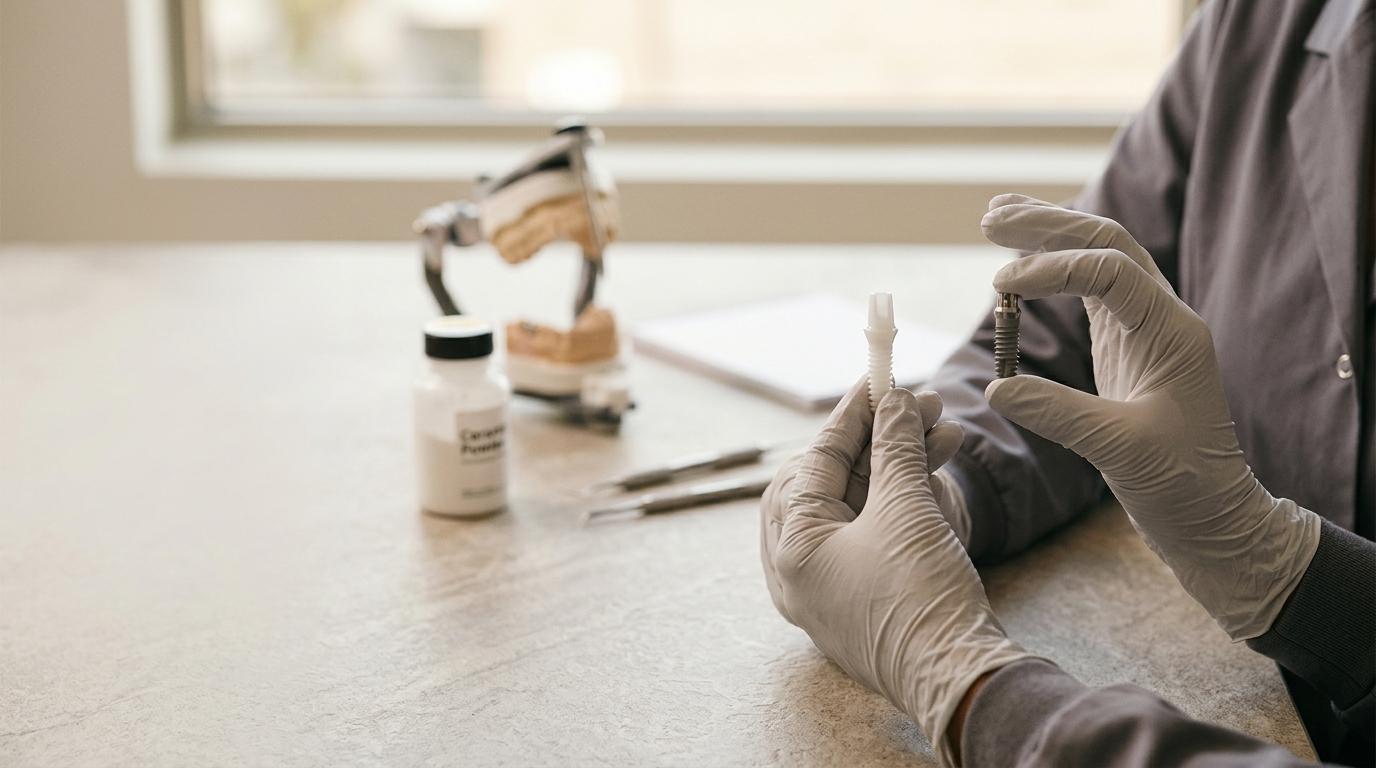
Short answer: All-on-4 isn't the only way to replace a full arch of teeth. All-on-6 spreads the bite load across six implants and suits people with slightly more bone loss or a heavier bite. A six-to-eight implant arch is used when even more support or stability is needed. Zygomatic implants are a specialist option for severe upper jaw bone loss, anchored in the cheekbone instead of the jaw, and are assessed and usually referred to an oral or maxillofacial surgeon. A CT scan is what actually decides which of these your case needs not preference, and not price. As a guide only, full-arch costs step up from roughly $18,000–$28,000 per arch for All-on-4, to $22,000–$34,000 for All-on-6 or six-to-eight implant arches, with zygomatic cases priced separately by the specialist surgical team. A written quote always follows a proper exam.
If you've already read about the standard option, our All-on-4 dental implants in Perth guide covers the basics. This article is for the next question: what if All-on-4 isn't quite right for your jaw?
How many implants does a full arch actually need?
There's no single correct number. A full arch of fixed teeth can be supported by four implants, six, eight, or occasionally more the number depends on how much bone is available, how it's distributed, and how much load the bridge will carry.
Four implants (All-on-4) works because the back two are angled to use the densest bone and avoid structures like the sinus. Six implants (All-on-6) adds extra anchor points, which can mean better load distribution and sometimes a buffer if bone quality is uneven. Eight implants is less common and tends to come up when a dentist wants extra support across a wider arch or where a couple of implants are placed as backup in case one doesn't integrate as expected. None of these numbers are fixed rules they're a clinical judgement made from your scan, not a package you pick off a menu.
Who actually suits All-on-6 instead of All-on-4?
All-on-6 tends to get considered when:
There's a bit more bone loss than an All-on-4 case ideally wants, but not so much that grafting or zygomatic implants are needed.
The bite is heavier than average (clenching, grinding, a strong jaw) and the extra implants help share that load.
A dentist wants more flexibility in where the bridge is supported, particularly across a wider or less even ridge.
The patient wants a bit more of a safety margin built into the plan.
It isn't automatically "better" than All-on-4 it's a different distribution of support for a different bone situation, and it costs more because there are more surgical sites, more components, and more planning involved. If you're still deciding between implants generally and a removable option, our comparison on dental implants vs dentures and our piece on implant-retained dentures are worth reading before you narrow it down to a fixed full arch.
What is a six-to-eight implant full arch, and who needs it?
This sits between All-on-6 and the kind of bone-grafted or zygomatic cases at the more complex end. It's generally considered when the arch is wide, bone density varies noticeably from one side to the other, or the planning team wants redundancy extra implants so the final bridge isn't entirely dependent on every single one integrating perfectly.
It's also where material choice starts to matter more, since a longer-span bridge over more implants changes how forces travel through the restoration. If you're weighing up the final bridge material, zirconia vs titanium dental implants breaks down how that decision gets made.
What are zygomatic implants, and when do they get considered?
Zygomatic implants are longer implants anchored in the zygoma (cheekbone) rather than the upper jawbone itself. They're considered specifically for severe upper jaw bone loss cases where there simply isn't enough bone height or volume in the maxilla to support conventional implants, even with grafting.
This is specialist surgery. It's typically performed in a hospital setting by an oral or maxillofacial surgeon, often working alongside the restorative dentist who will eventually fit the bridge. If your CT scan shows this level of bone loss, the honest and safe next step is an assessment with that surgical team not a straightforward in-chair placement. We say this plainly because it matters: a general or implant-focused dental clinic can identify when a case looks like it needs zygomatic implants and coordinate the referral, but the surgery itself sits with a specialist.
Why does a CT scan decide this, and not just a check-up?
A regular exam can tell a dentist that teeth are missing or failing and that an arch needs replacing. It can't reliably show how much bone is actually there, where the sinus floor sits, where the nerve canal runs, or how dense the bone is in different spots along the ridge.
A cone-beam CT scan gives a 3D picture of all of that. It's what separates "this looks like an All-on-4 case" from "this needs six implants" from "this is a referral case" and it's also what stops a treatment plan from being guesswork. This is one of the reasons digital planning tools have become standard for full-arch work; you can read more about how that imaging fits into treatment planning on our digital dentistry page. In short: the scan decides the plan, not the other way around.
What does the cost step-up actually look like?
As a guide only every quote follows an exam, and these ranges will move depending on your specific case:
Option | Typical guide range (per arch, AUD) |
|---|---|
All-on-4 | $18,000–$28,000 |
All-on-6 | $22,000–$32,000 |
Six-to-eight implant arch | $24,000–$34,000 |
Zygomatic implants | Quoted separately by the specialist surgical team |
The step-up reflects more implants, more surgical planning time, sometimes more imaging, and in the case of zygomatic implants, hospital and specialist surgeon fees that sit outside a standard dental clinic's pricing altogether. The Australian Dental Association publishes fee guidance that clinics reference when building a quote, and full-arch treatment typically draws on several item numbers surgical placement, any grafting, imaging, and the final prosthesis which is why it's priced as a package rather than a single line item. For a broader look at how full-arch pricing is typically structured, see our dental implants cost guide.
What happens at the assessment?
A full-arch assessment generally includes a clinical exam, a CT scan, and a conversation about your bone volume, bite, health history, and what you want day to day chewing stability, appearance, how removable or fixed you want the result to be. From there, the dentist will say plainly whether your case looks like a standard All-on-4, a six-or-more implant plan, or one that needs a specialist referral for zygomatic implants. You'll leave with a written quote, not a verbal estimate.
Where to get assessed in Perth
Mullaloo Beach Dental provides general and family dentistry alongside implants and full-arch implant work, crowns, veneers, Invisalign, dentures, sleep dentistry and laser dentistry, in a relaxed coastal setting in Perth's northern suburbs. If you're trying to work out which full-arch path suits your jaw, a CT scan and an honest conversation is the place to start. You can see the full range of services at the Mullaloo Beach Dental clinic page or go straight ahead and book an appointment.
FAQs
How many implants do I need for a full arch? It depends on your bone volume and bite, not personal preference. Most plans use four, six, or occasionally eight implants per arch, decided from your CT scan.
What's the real difference between All-on-4 and All-on-6? All-on-6 uses two extra implants to spread load across more anchor points, generally considered when there's a heavier bite or slightly more bone loss than an ideal All-on-4 case.
Can I get zygomatic implants in Perth? Cases that look like they need zygomatic implants are assessed via CT scan and usually referred to an oral or maxillofacial surgeon, often working with your restorative dentist on the final bridge.
Why can't I just get a price over the phone? Full-arch pricing depends on how many implants, whether grafting is needed, and the final bridge material all of which come from the exam and scan, not a phone call.
Does private health insurance cover full-arch implants? Extras cover may contribute to parts of the process depending on your policy and level of cover; it's worth checking your specific fund and item numbers before treatment.
How long does full-arch treatment take from start to finish? Timeframes vary by case healing and integration time differs depending on how many implants are placed and whether grafting is involved, so your dentist will give you a timeline specific to your plan after the scan.