Short answer: In Perth, clear aligners range from roughly $2,000–$3,500 for mail-order kits, $3,500–$6,500 for dentist-supervised budget brands, and $4,500–$9,000+ for Invisalign, depending on how much your teeth need to move. Cheaper brands can shift mild crowding or spacing; they generally cannot fix bite problems, rotated teeth, or cases needing extraction space. Mail-order aligners skip the in-person exam and X-rays, which is where real risk creeps in. The right choice depends on your case, not just the price tag.
What's actually on offer under "clear aligners" in Perth?
There are three broad tiers, and they're easy to muddle together because the marketing all looks the same: a smiling face, a clear tray, a lower number than you expected.
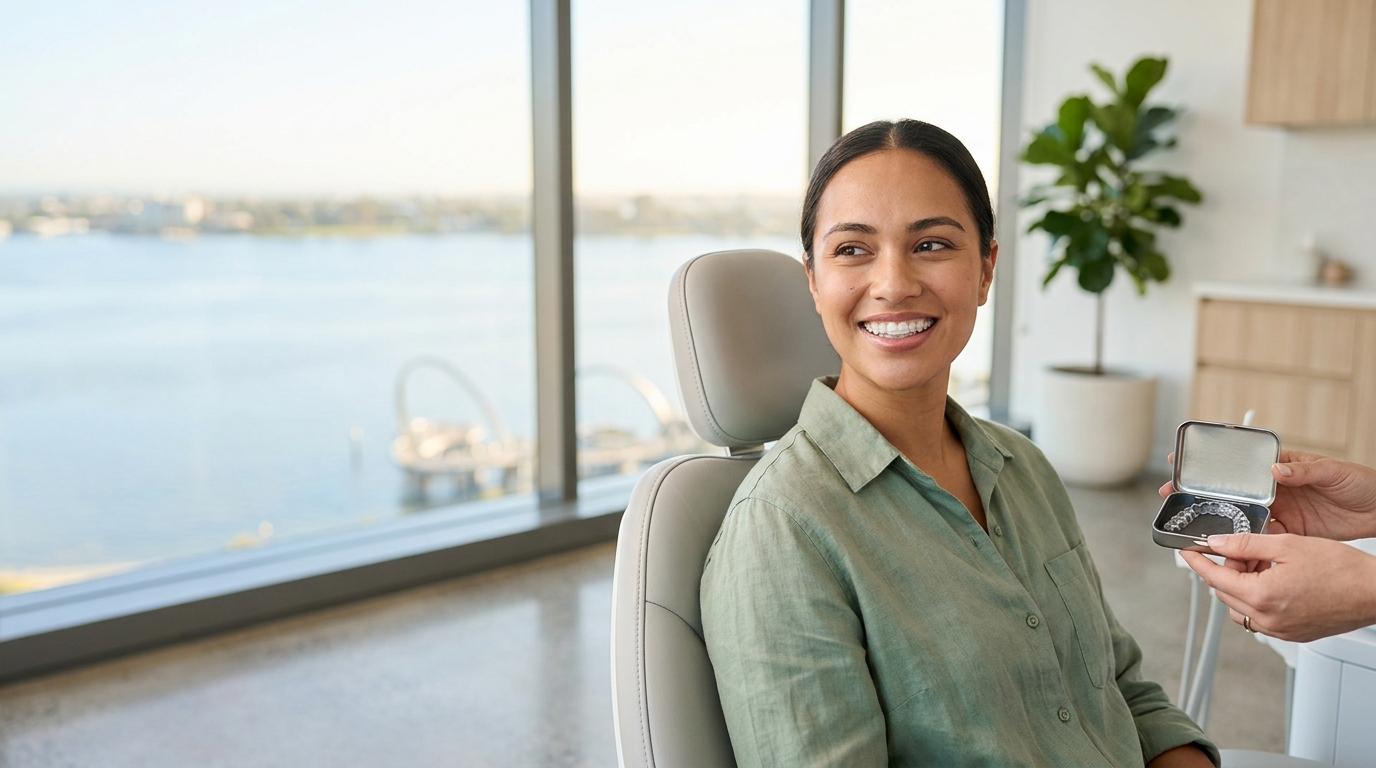
Invisalign, prescribed by a dentist or orthodontist, uses a proprietary scanning and planning system and is the brand most Perth practices train on and stock. Dentist-supervised budget brands (sold through general dental clinics, sometimes under a practice's own label) use similar clear-tray technology at a lower licence cost, with a dentist still doing the scan, the plan and the check-ups. Mail-order or "direct-to-consumer" aligners are ordered online, often from an impression kit you do yourself at home or from a scan at a shopping-centre kiosk, with little or no local, in-person dental involvement.
The price gap between these three is real. So is the gap in what you're actually buying along with the plastic.
How much do Invisalign and the cheaper aligner brands cost in Perth?
As a guide only — every quote should follow a proper exam:
Mail-order aligners: roughly $2,000–$3,500 for a full course, ordered online.
Dentist-supervised budget/in-house brands: roughly $3,500–$6,500, scanned and fitted by a Perth dentist.
Invisalign: roughly $4,500–$9,000+, with simple single-arch cases at the lower end and full comprehensive cases, or cases needing a specialist orthodontist, at the top.
These bands overlap on purpose a mild Invisalign Express case can cost about the same as a more involved budget-brand case. The number on the website is a starting point, not the fee you'll pay once a dentist has actually looked in your mouth. For a wider sense of how orthodontic pricing sits alongside other common dental costs in Perth, our guide to dental procedure costs in Australia uses the 25th–75th percentile from the Australian Dental Association's annual national dental fees survey as a benchmark — see our 2026 Perth dental costs guide for the broader picture.
If you're still deciding between aligners and traditional braces altogether, we've covered that cost-and-timeframe comparison separately in our Invisalign vs braces guide — this article focuses on the question that one doesn't: Invisalign against the cheaper aligner brands.
What can each type actually move and what can't it?
This is where cheap aligners earn their price tag, and also where they run out of road.
All clear aligners, regardless of brand, work well on mild-to-moderate crowding or spacing, minor rotations, and cosmetic "relapse" after old braces. Mail-order systems in particular are built around this narrow lane; one orthodontic comparison notes plainly that mail-order aligners are designed for mild crowding and spacing, and are not appropriate for bite correction, moderate to severe crowding, or cases involving missing teeth or gum disease.
Invisalign's attachment system (small tooth-coloured bumps bonded to the teeth) and its wider range of tray designs give it more reach into rotations, bite opening, some overbite and crossbite correction, and arch expansion — which is why it costs more and why it's still not a substitute for braces or a specialist orthodontist in genuinely complex cases. Severe crowding, significant jaw discrepancies, or cases needing extractions and careful anchorage are still a job for fixed braces or an orthodontic referral, whichever brand of clear tray you're comparing.
How much dentist supervision do you actually get?
This is the part the price comparison tables never show you.
With Invisalign and dentist-supervised budget brands, you get an in-person exam, X-rays or a scan, a treatment plan a dentist has reviewed, and progress check-ups every 6–8 weeks where someone qualified looks at how your teeth and gums are actually responding not just whether the tray looks like it's tracking.
With mail-order kits, supervision is usually limited to photo check-ins with a remote provider you'll likely never meet. At-home aligners carry real risks because they skip X-rays, periodontal exams, and in-person evaluation, and without professional oversight, problems like root damage, bite issues, and gum recession can develop undetected. A remote reviewer looking at a photo genuinely cannot see what an X-ray and a set of hands can.
What do refinements and replacement aligners cost?
Teeth rarely move exactly to plan on the first set of trays, and this is a cost most price comparisons leave out entirely.
Invisalign refinements (extra trays when teeth need more movement than the original plan achieved) are often included if ordered within the original treatment window, but a second round of refinements, or refinements requested after the case is closed, can add roughly $300–$1,200.
Budget dentist-supervised brands tend to price refinements similarly, scaled to the brand's licence fee ask for this in writing before you start.
Mail-order refinements and lost/broken tray replacements usually come with a flat per-tray or per-round fee, commonly $100–$400 each, and critically with no one physically checking why the tray isn't tracking before another one is sent.
There's a second, less obvious cost with mail-order brands: company continuity. Direct-to-consumer orthodontics has a patchy track record; the sector's best-known collapse saw one major provider cease operations in December 2023 after filing for Chapter 7 bankruptcy, which left people mid-treatment with no one to send refinement requests to at all.
Who should not use a mail-order aligner at all?
Be honest with yourself on this list, because it's the one place where the cheapest option can turn into the most expensive mistake.
Skip mail-order aligners entirely if you have:
Any sign of gum disease — bleeding gums, loose teeth, or receding gums. Moving teeth through active gum disease can accelerate bone loss.
Undiagnosed decay or old root canal work — nothing in a photo-based review checks for this.
A bite problem (deep bite, open bite, significant crossbite) rather than just crowded or gapped teeth.
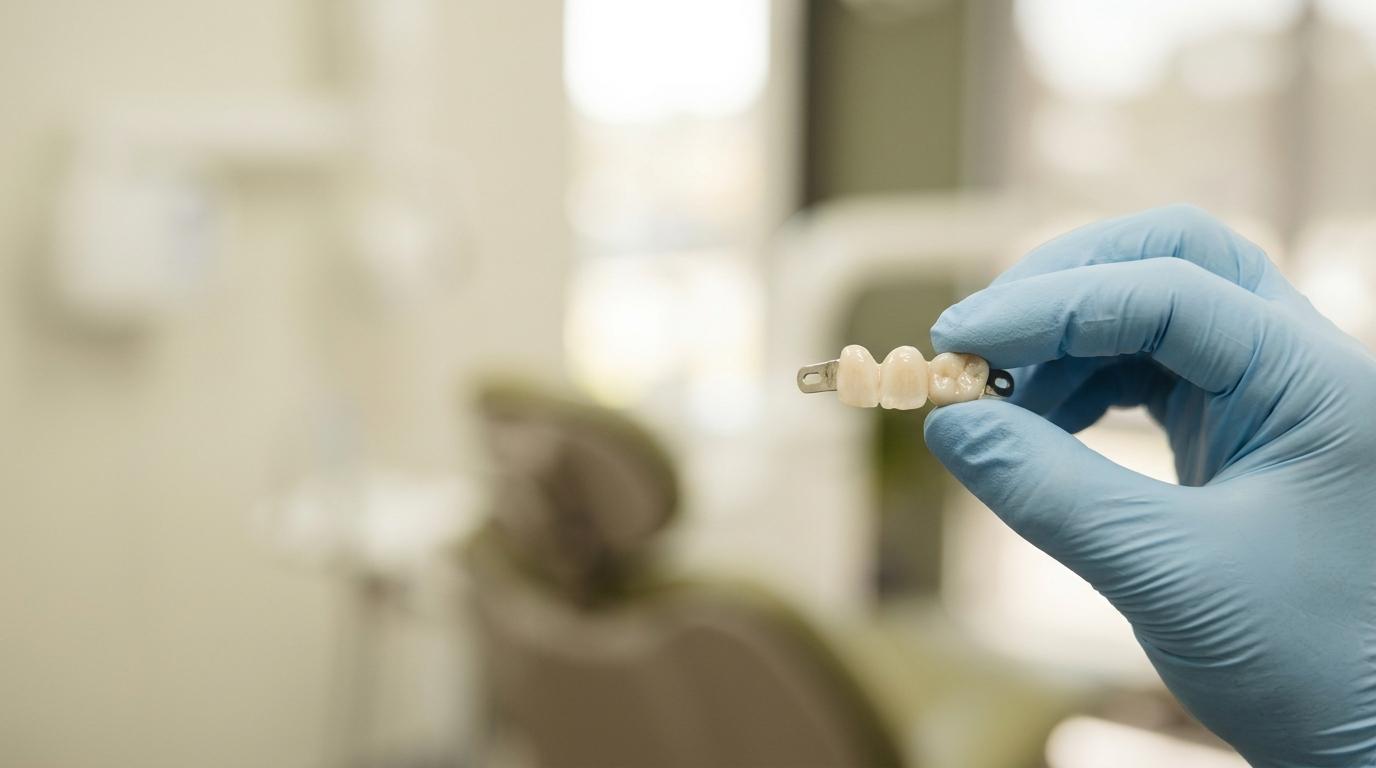
Missing teeth, bridges, or a mix of natural teeth and implants — these need a dentist's assessment, not a mail-order algorithm.
A history of root resorption, dental trauma, or jaw joint (TMJ) pain.
The clinical literature is consistent on why: remote aligner companies work from photos or putty impressions mailed in a kit, and neither method can detect bone loss, short roots, or early periodontal disease if a patient has undiagnosed bone loss and begins moving teeth without that knowledge, the forces applied can accelerate root resorption, a process where the body begins breaking down the tooth root itself. That's not scaremongering about one brand; it's a structural limitation of any system that skips X-rays and an in-person exam, whatever the box says on the front.
So which one is right for you?
If your teeth are genuinely only a little crowded or gapped, your gums are healthy and you've had a dental check-up in the last twelve months, a dentist-supervised budget brand can be a reasonable middle ground you get real supervision at a lower price than Invisalign. If your case involves bite correction, rotations, or anything beyond mild movement, Invisalign (or a referral to an orthodontist for braces) buys you a wider range of correction and closer follow-up. If you have any doubt about gum health, old dental work, or missing teeth, book an in-person exam before you order anything online.
A general dentist can tell you, with X-rays in hand, which of these three lanes you're actually in and whether aligners are appropriate at all before you spend anything. You can see Invisalign and general orthodontic options on our site: Invisalign treatment and orthodontics in Perth.
North Beach Dental, in Perth's northern suburbs, is a good starting point for the diagnostic side of this decision. The practice's cosmetic dentistry and porcelain veneers are sometimes used to finish a smile after aligner movement is done, its root canal treatment addresses decay that would need sorting before any tooth is moved, and for patients whose case involves missing teeth, its dental implants, All-on-4 and denture services cover the ground that no clear aligner mail-order or otherwise ever will. See the clinic at North Beach Dental.
Many patients finish aligner treatment and look at whitening as a last step our teeth whitening cost guide covers in-chair versus take-home options if that's next on your list.
Ready to find out which lane your case is in? Book a dental exam in Perth and get a written quote once a dentist has actually seen your teeth.
FAQ
Is Invisalign worth the extra cost over cheaper aligner brands in Perth?
It depends on your case. For mild crowding or spacing, a dentist-supervised budget brand can achieve a similar result for less. For rotations, bite correction, or more complex movement, Invisalign's wider attachment and tray system generally gives it more to work with but the only way to know which category you're in is an in-person exam.
Can mail-order aligners fix an overbite or crossbite?
Generally no. Mail-order aligners are not appropriate for bite correction, moderate to severe crowding, or cases involving missing teeth or gum disease. Bite correction is better suited to Invisalign under dentist supervision, fixed braces, or a specialist orthodontist referral.
What happens if my teeth stop tracking with a mail-order aligner?
With no in-person follow-up, tracking problems often go unnoticed until the fit is visibly wrong. With dentist-supervised brands and Invisalign, regular check-ups catch this early, and the plan can be adjusted or refined before it becomes a bigger problem.
Are refinements included in the price of Invisalign or budget aligners?
Sometimes, within the original treatment window but a second round of refinements, or ones requested after your case is marked complete, commonly carries an extra cost. Always ask for refinement and replacement-tray pricing in writing before you start.
Do I need X-rays before starting clear aligners?
Yes, ideally. X-rays let a dentist check for decay, bone levels and root health before any tooth is moved conditions that no mail-order impression kit or photo review is designed to detect.
Who should see a specialist orthodontist instead of using any clear aligner?
Anyone with significant crowding, a jaw-size discrepancy, a complex bite problem, or a case likely to need extractions should be assessed for braces or specialist orthodontic treatment rather than any clear aligner brand, cheap or premium.
This article is general information for Perth patients and is not a substitute for an in-person dental examination. Prices quoted are indicative ranges only; your dentist will provide a written quote after assessing your teeth, gums and bite.