Maryland Bridge Cost in Perth: A Cheaper Fix for One Missing Front Tooth
Short answer: A Maryland (resin-bonded) bridge typically costs somewhere between $1,500 and $3,000 in Perth for a single front tooth, with a written quote only possible after an exam. It's cheaper than a conventional bridge or an implant and barely touches the adjacent teeth, but it debonds more often than either alternative and only suits front teeth with a light bite. It is not a routine option for back teeth.
If you've lost a front tooth and want a fixed option without grinding down the teeth either side of the gap, a Maryland bridge is worth asking your dentist about. This guide covers realistic Perth pricing, how long these bridges tend to last, how they stack up against an implant or a traditional bridge, and who they genuinely suit.
What is a Maryland bridge?
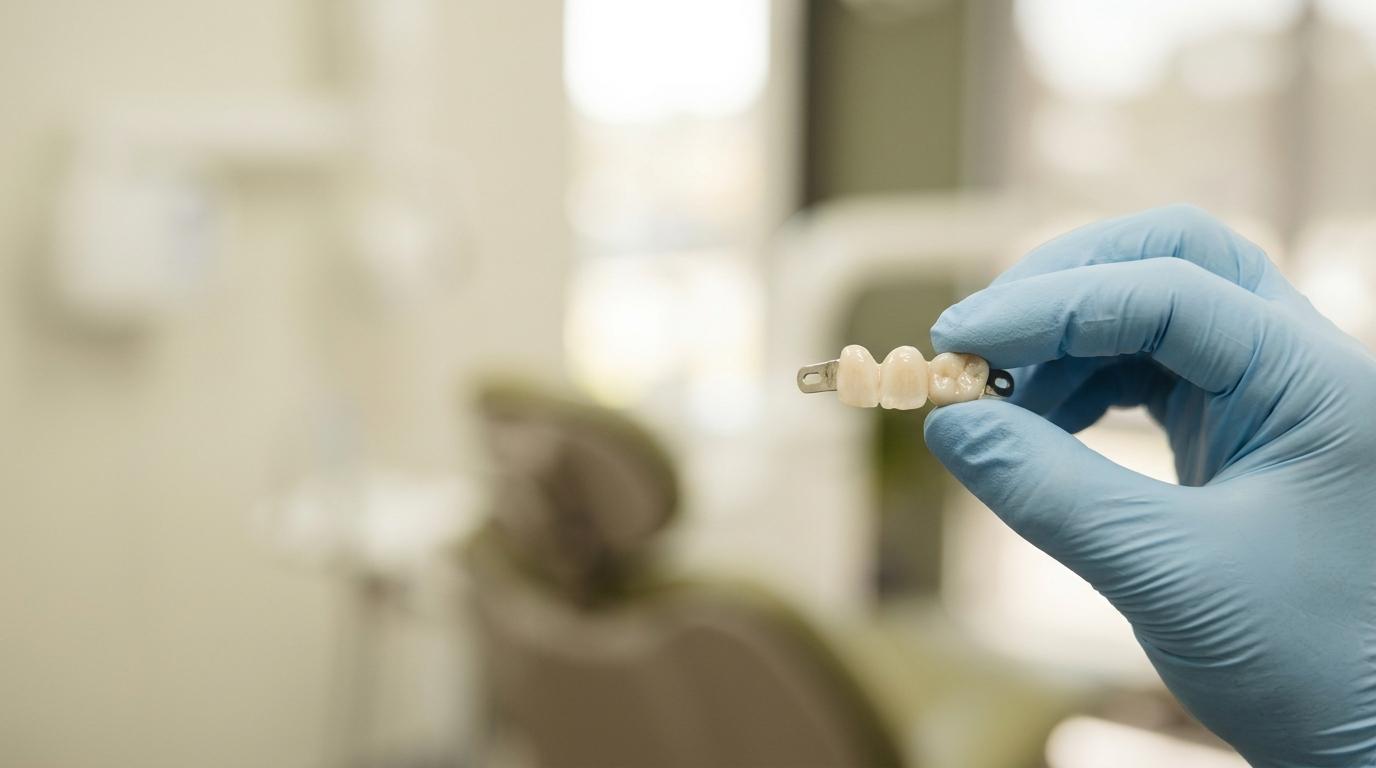
A Maryland bridge also called a resin-bonded bridge replaces a single missing tooth without the full crown preparation a conventional bridge needs. A Maryland bridge is a resin-bonded fixed partial denture an artificial tooth attached to one or two thin "wings" that bond to the backs of nearby teeth, holding the replacement tooth in place without wrapping the support teeth in full crowns. A Maryland bridge instead relies on modern bonding to hold a wing against the enamel, so the neighbouring teeth stay almost untouched.
That's the whole appeal in a sentence: unlike traditional bridges that require grinding down the neighboring teeth, resin-bonded bridges are a more conservative approach, preserving precious tooth structure. That's why it's commonly discussed for front teeth, where chewing forces are usually lower and preserving enamel matters.
How much does a Maryland bridge cost in Perth?
There's no single national price, and no clinic should quote you a firm fee without first examining the gap, the adjacent teeth and your bite. As a planning guide only, published Australian pricing for a single-tooth Maryland bridge generally sits in the $1,185 to $2,340 bracket, with some practices starting quotes from around $2,000. In practice, a reasonable guide range for Perth is roughly $1,500–$3,000 for one front tooth, depending on the material used for the wing and pontic, the complexity of the bite, and whether any preparatory work is needed first.
For broader cost context, it helps to know what the Australian Dental Association's own fee data shows for bridge work generally: based on data from the Australian Dental Association, the cost of a bridge in Australia can be up to $1,800 per tooth. That figure covers bridge pontics generally rather than Maryland bridges specifically, but it's a useful sanity check when a quote looks unusually high or low. For a wider view of what common procedures cost locally, see our Perth dental costs guide (https://dentalappointments.com.au/blog/restorative-dentistry/dental-costs-in-perth-2026-what-common-treatments-really-cost).
Every quote is a guide until a dentist has actually looked in your mouth the only way to get a number you can rely on is an exam and a written treatment plan.
How does it compare with a conventional bridge?
A conventional three-unit bridge crowns the teeth on both sides of the gap to support a false tooth in the middle. That extra lab work and the two crowns push the price up substantially, with Australian pricing commonly landing between roughly $3,000 and $6,000 for a standard three-unit case. The trade-off is the opposite of the Maryland bridge: more cost and more tooth preparation, but typically a more durable, longer-serving result. For the full side-by-side on bridge types, pricing and when a partial denture might be the smarter call, read our bridge cost and comparison guide (https://dentalappointments.com.au/blog/restorative-dentistry/dental-bridge-cost-perth-2026-bridge-vs-implant-vs-partial-denture). If the discussion moves to a crown-supported conventional bridge, it's also worth understanding what a crown itself costs (https://dentalappointments.com.au/blog/restorative-dentistry/dental-crown-cost-in-perth-porcelain-ceramic-zirconia-prices-explained-2026-guide), since each abutment tooth effectively gets one.
Maryland bridge vs implant — which is the better fix?
This is the comparison most people actually want answered, and it comes down to cost now versus durability later.
A single-tooth implant involves a surgical stage, a healing period, and a custom crown on top — see our guide to how the single-tooth implant process works and what it costs (https://dentalappointments.com.au/blog/dental-implants/single-tooth-implant-perth-cost-and-what-to-expect) and our broader dental implants cost guide (https://dentalappointments.com.au/blog/restorative-dentistry/dental-implants-perth-cost-guide-how-the-process-works) for Perth-specific detail. Implants generally cost several thousand dollars more upfront than a Maryland bridge, reflecting the surgical component, the healing time, and the fact that the implant stands alone rather than relying on a neighbouring tooth.
In exchange for that higher cost, an implant doesn't touch the adjacent teeth at all and tends to be the more predictable long-term option. A Maryland bridge is the cheaper, faster, no-surgery alternative but it borrows support from a neighbouring tooth via a bonded wing, and that bond is the weak point. Neither is simply better a Maryland bridge is quicker, cheaper and avoids surgery, while an implant is more durable and stands alone. The right choice depends on the tooth, your age and the health of the neighbours.
How long does a Maryland bridge last, and how often does it come loose?
This is where honesty matters more than marketing. A Maryland bridge is a genuinely good option for the right case, but it is not as durable as a conventional bridge or an implant, and debonding is the known trade-off.
Research shows resin-bonded bridges have an estimated survival of around 88 to 91 percent at five years, and for front teeth some studies report success beyond 90 percent at twelve years or more, especially with a single-wing design. Five-year survival is around 88 to 91 percent; the most common problem is the wing debonding, not breaking.
Looking further out, the picture is less rosy but still workable: the Maryland Bridge exhibits a 10-year overall survival rate of 77%, with debonding at 21%, tooth discolouration at 18%, and caries at 7%. The good news is that a debond usually isn't the end of the bridge. If the bridge is rebonded after dislodgement, survival can improve to 87% after 8 years under risk. If it comes loose it can often simply be rebonded.
In plain terms: expect the possibility of at least one rebonding appointment over the life of the bridge, and don't treat a loose wing as a failure treat it as routine maintenance and get it seen promptly rather than leaving the gap unsupported.
Who is a Maryland bridge actually suited to?
Case selection is everything with this design, which is why it isn't offered for every missing tooth.
Good candidates typically have:
A missing front tooth (incisor or canine) rather than a molar or premolar under heavy chewing load
Healthy, undecayed enamel on the neighbouring tooth or teeth for bonding
A light, even bite with no heavy grinding or clenching
A preference to avoid cutting into healthy adjacent teeth, including younger patients who have lost a tooth through trauma and aren't ready for an implant
It's less attractive for people with heavy bite forces, obvious grinding, poor enamel for bonding, or a gap positioned where the bridge will take repeated functional stress. If any of those apply, a conventional bridge or an implant is usually the more sensible conversation to have with your dentist, and that assessment can only happen in the chair, not from a price list.
What's involved, and how many visits does it take?
Compared with an implant, the process is quick. After an exam and a discussion of whether you're a suitable candidate, your dentist takes an impression or scan of the gap and the back surface of the supporting tooth. A laboratory then fabricates the wing and pontic to fit that exact space. At a fit appointment the bridge is checked for seating, appearance and bite before a careful, moisture-controlled bonding procedure fixes it in place. There's typically no lengthy healing period and no temporary tooth needed in between, which is part of why it appeals to people wanting a faster, simpler fix for a single front gap.
Does health insurance help with the cost?
Often, yes, but with conditions. Dental bridges including Maryland bridges are generally classified as major dental under Australian extras cover, and rebates commonly range from roughly $1,000 to $2,000 depending on your fund, with a 12-month waiting period often applying before major dental benefits kick in. The practical step is to check your item numbers and annual limit with your fund before treatment starts, since a rebate rarely covers the full gap payment.
Getting a proper quote in Perth
Every number in this article is a guide, not a quote. The only way to know what your specific case will cost is a dental exam, an assessment of whether your bite and adjacent tooth suit this design, and a written treatment plan. If you'd rather compare your crown, bridge and implant options side by side first, our crowns and bridges treatment page (https://dentalappointments.com.au/treatments/crowns-bridges) and dental implants treatment page (https://dentalappointments.com.au/treatments/dental-implants) are a good starting point.
If you're in Perth's northern suburbs, North Beach Dental (https://dentalappointments.com.au/find-a-clinic/north-beach) is worth considering for the assessment. The practice offers cosmetic dentistry and porcelain veneers for front-tooth aesthetics, dental implants and All-on-4 if a fixed implant-based solution turns out to be the better long-term fit for your gap, root canal treatment if the adjacent tooth itself needs attention before any bridge work, and dentures as a removable alternative while you weigh up your options. A dentist there can tell you, after a look in your mouth, whether a Maryland bridge is realistic for your tooth or whether an implant is the steadier long-term choice.
Ready to get a real number instead of a guess? Book an appointment (https://dentalappointments.com.au/book) and bring your questions about the trade-offs cost, durability, and what happens if the bond doesn't hold.
Frequently Asked Questions
Is a Maryland bridge cheaper than a dental implant? Generally yes, upfront. A Maryland bridge avoids the surgical stage, healing time and implant fixture cost that a single-tooth implant involves, which is why it's often considered for younger patients or anyone wanting a faster, less invasive fix for a front tooth. The trade-off is that an implant tends to be more durable over the long run.
Will a Maryland bridge ruin my adjacent teeth? No that's the main point of this design. Unlike traditional bridges that require grinding down the neighboring teeth, resin-bonded bridges are a more conservative approach, preserving precious tooth structure. The neighbouring tooth needs healthy enamel for the wing to bond to, but it isn't crowned or significantly cut down.
How often do Maryland bridges fall off? More often than people expect, which is the main honest downside. The most common issue with a Maryland bridge is the wing coming unstuck, which happens in roughly one in five cases over time. It's usually a nuisance rather than a disaster, since the bridge can often be cleaned and rebonded.
Can a Maryland bridge be used for a back tooth? It's not the usual choice. It suits front teeth and low-bite-force gaps rather than heavy chewing areas. Molars carry much heavier biting forces, which stresses the bond more than it's designed for.
What happens if my Maryland bridge comes loose? Don't try to reattach it at home keep the bridge safe and contact your dentist promptly. A loose Maryland bridge may be suitable for rebonding if the bridge and support teeth are still in good condition, but delaying the review can make the fix harder.
Is the price in this article what I'll actually pay? No every figure here is a general guide based on published Australian pricing, not a quote for your mouth. The only way to get an accurate number is an in-person exam and a written treatment plan from your dentist.