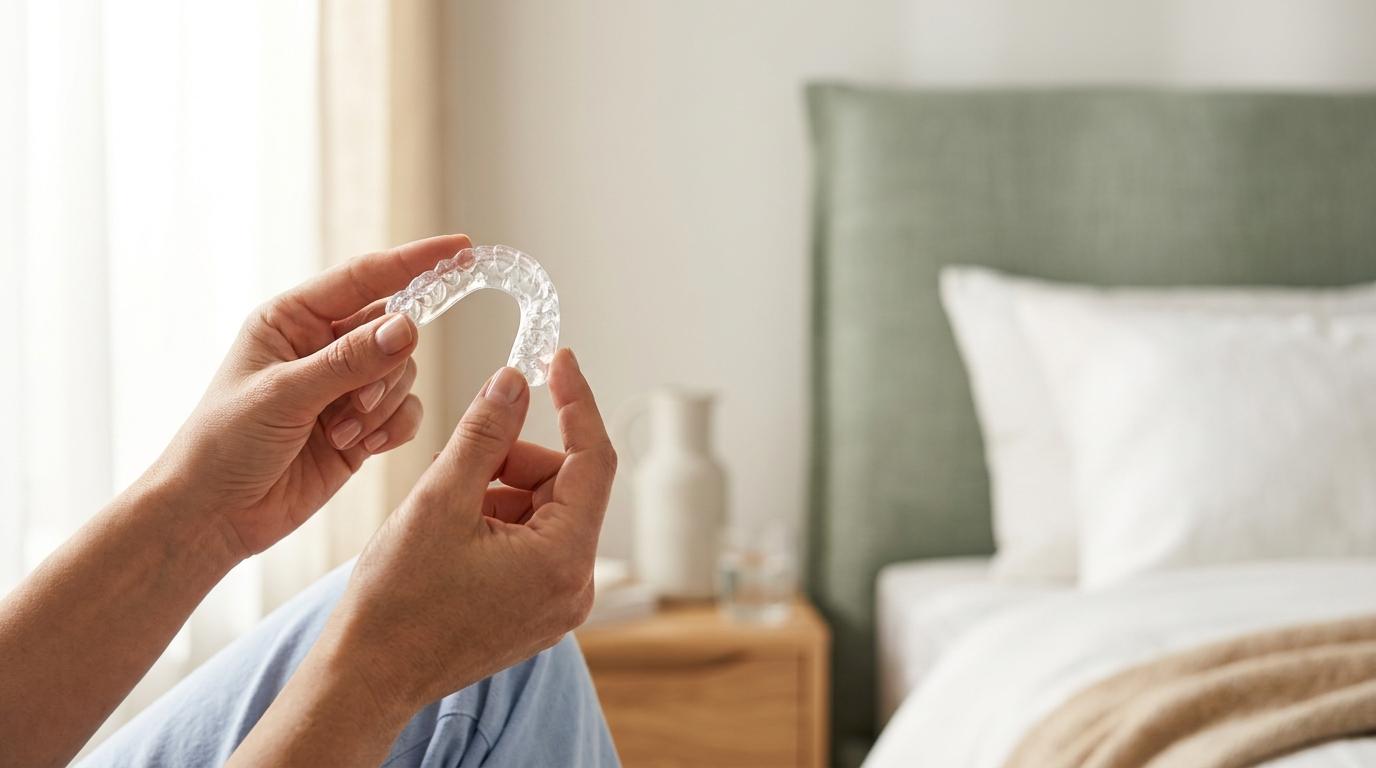
If you've ever woken up with a sore jaw, a dull headache at your temples, or noticed your partner complaining about a grinding noise coming from your side of the bed, you're not alone. Teeth grinding known clinically as bruxism is one of the most common (and most commonly overlooked) dental issues we see. The good news is that it's also one of the most manageable, especially once you understand what's causing it and how a custom night guard can help.
What Is Teeth Grinding (Bruxism)?
Bruxism is when you clench, grind or gnash your teeth. It usually happens subconsciously, either during waking hours or when you're asleep. Causes include stress, anxiety, sleep disorders and certain medications. Most people don't even realise they're doing it. Most people who grind their teeth are unaware of it until symptoms appear or a dentist notices wear patterns.
Bruxism generally falls into two categories:
Awake bruxism — jaw clenching during the day, often linked to concentration, stress or anxiety.
Sleep bruxism — grinding or clenching that happens overnight, unconsciously during the day, but mostly at night. Sleep bruxism is considered a sleep-related movement disorder.
Signs You Might Be Grinding Your Teeth
Because bruxism often happens without your awareness, the symptoms are usually the first clue. Common signs include:
Teeth grinding or clenching, which may be loud enough to awaken your sleep partner
Teeth that are flattened, fractured, chipped, or loose
Worn tooth enamel, exposing deeper layers of your tooth
Increased tooth sensitivity
Jaw or face pain or soreness and tired or tight jaw muscles
Pain that feels like an earache, though it is actually not a problem with one's ear
Dull headache originating in the temples
Damage from chewing on the inside of your cheek and indentations on your tongue
If two or more of these sound familiar, it's worth getting your bite and jaw checked by a dentist rather than waiting for things to get worse.
Why Does Teeth Grinding and Jaw Clenching Happen?
There isn't one single cause of bruxism it's usually a combination of factors. According to dental researchers, though bruxism is usually thought of as a symptom of stress, it can also be caused by sleep disorders, teeth that don't line up properly, or missing or crooked teeth. Researchers found that people who smoke or drink alcohol or coffee are twice as likely to grind their teeth as people who don't.
Sleep quality also plays a role. People who clench or grind their teeth during sleep are more likely to have other sleep disorders, such as snoring and pauses in breathing. This is why persistent grinding is sometimes a sign that it's worth discussing your broader sleep health with your GP, alongside seeing your dentist about protecting your teeth.
What Happens If Teeth Grinding Is Left Untreated?
Bruxism doesn't just wear down your teeth it can affect your entire jaw system. In many cases, bruxism can be frequent and severe enough to lead to jaw disorders, headaches, damaged teeth, and other problems. Left unmanaged, chronic grinding and clenching can also strain the temporomandibular joints (the joints that connect your jaw to your skull), contributing to ongoing TMJ-related discomfort.
If you're experiencing persistent jaw pain, clicking, or difficulty opening and closing your mouth comfortably, it's worth exploring dedicated TMJ treatment rather than just treating the symptoms in isolation.
How to Stop Grinding Teeth: What Actually Works
There's no single switch that stops bruxism overnight, but a combination of practical steps can significantly reduce how often and how hard you grind:
Protect your teeth with a night guard. In more severe cases, healthcare providers might recommend mouth guards. A dentist can make a custom mouth guard to protect your teeth. This appliance can also place your jaw in a more favorable position to reduce TMJ muscle strain.
Manage stress. Stress reduction techniques finding ways to manage stress may reduce bruxism symptoms. This includes a wide range of therapies like meditation, exercise and cognitive behavioral therapy.
Adjust lifestyle habits. Lifestyle changes such as reducing caffeine or alcohol consumption, and quitting smoking, can help you stop bruxing and get better quality sleep.
Get your bite assessed. If your teeth don't align well, this can contribute to clenching a dentist can identify and address underlying bite issues.
For most patients, though, the most immediate and effective teeth grinding treatment is a properly fitted night guard.
Night Guard vs Mouthguard: What's the Difference?
People often use "night guard" and "mouthguard" interchangeably, and while they're related, there's a useful distinction:
A mouthguard is a broader term that can refer to any protective device worn over the teeth including sports mouthguards designed to cushion impact during physical activity.
A night guard is specifically designed to be worn overnight to manage bruxism. A professionally made mouthguard is the most common and effective way to prevent tooth damage from nighttime grinding, creating a protective barrier between your upper and lower teeth.
Some dentists also use the term "splint" for a night guard-style appliance, particularly when it's also designed to help stabilise the jaw joint. Whatever term is used, the goal is the same: to stop your upper and lower teeth grinding directly against each other while you sleep.
Why a Custom Night Guard Beats a Store-Bought One
It's tempting to grab a cheap "boil and bite" mouthguard from a pharmacy, but the fit makes a real difference. A custom guard, made from a special mold that your dentist creates, will give you the closest, most comfortable fit. Night guards are also sold online and in stores, but may not provide the same protection.
A poor fit isn't just uncomfortable it can actually work against you. As one dental resource notes, a guard that does not fit correctly can feel uncomfortable, shift during sleep, or fail to provide the right level of protection, and in some cases, it may even make symptoms worse by affecting the way the jaw sits overnight. A properly fitted custom device, by contrast, is made for your specific bite, and that precision matters it helps the appliance feel more natural, improves comfort, and gives more reliable protection for the teeth and jaw.
Custom night guards also protect more than just enamel. They help protect fillings, crowns, veneers, and other restorations from the repeated pressure of clenching and grinding. If you've invested in dental work, a night guard helps safeguard that investment too.
You can learn more about the process and options on our custom mouthguards treatment page.
Getting Teeth Grinding Treatment in Perth: Two Rocks Dental Care
If you're searching for a night guard in Perth's northern coastal suburbs, Two Rocks Dental Care is a solid local option for patients dealing with grinding, clenching, and related jaw discomfort. The clinic offers custom-fitted mouthguards and splints as part of its general dentistry services, designed to protect your teeth from the effects of nighttime grinding and help ease jaw tension associated with clenching.
Two Rocks Dental Care serves the local Two Rocks community as well as surrounding areas including Yanchep, Eglinton, and Two Rocks. As with any bruxism management plan, the process typically starts with an assessment of your teeth, bite, and jaw before a custom appliance is made to fit your mouth precisely.
You can view clinic details, hours, and location on the Two Rocks clinic page.
When Should You See a Dentist About Teeth Grinding?
You don't need to wait until you're in pain to get checked. A good rule of thumb: if you regularly wake up with jaw soreness, notice flattened or chipped teeth, get frequent morning headaches, or have been told by a partner that you grind at night, it's time for an assessment. A properly fitted night guard is one of the most effective, most affordable tools a dentist has for protecting your smile from the forces you cannot control while you sleep.
Early intervention matters the damage from grinding tends to build up gradually, and a custom night guard is far simpler (and cheaper) than repairing cracked teeth, worn enamel, or damaged fillings down the track.
Book Your Bruxism Assessment Today
If jaw clenching, morning headaches, or teeth grinding are affecting your sleep or your smile, don't wait for it to get worse. A custom night guard from Two Rocks Dental Care could be the simple, effective solution you need.
Book your appointment now and take the first step toward protecting your teeth and easing jaw tension for good.
Tags