If you've been searching for a snoring mouthguard Perth locals can rely on, you've probably already tried the easy fixes fewer drinks before bed, sleeping on your side, a new pillow and you're still being nudged awake (or nudging your partner). A dental device called a mandibular advancement splint (MAS) is one of the main non-surgical options dentists discuss with patients for snoring. But before you book anything, it's worth understanding exactly what this device does, who it's suitable for, and most importantly why loud snoring sometimes needs a medical work-up before any splint is made.
This article is about snoring and mild-to-moderate sleep apnoea splints specifically. If you're looking for a mouthguard to stop teeth grinding (bruxism) rather than snoring, our separate guide on night guards for teeth grinding covers that device in detail it's a different appliance, built for a different job.
What Is a Snoring Mouthguard (Mandibular Advancement Splint)?
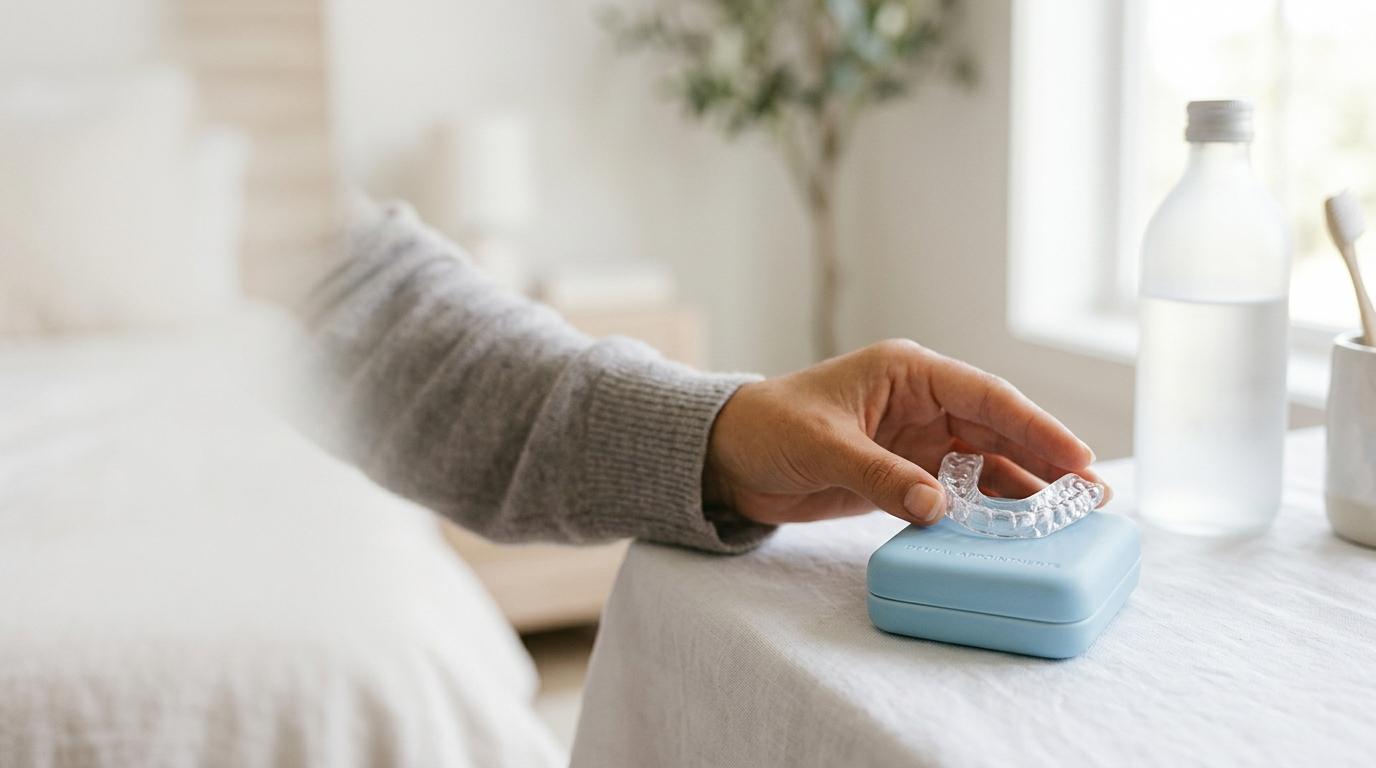
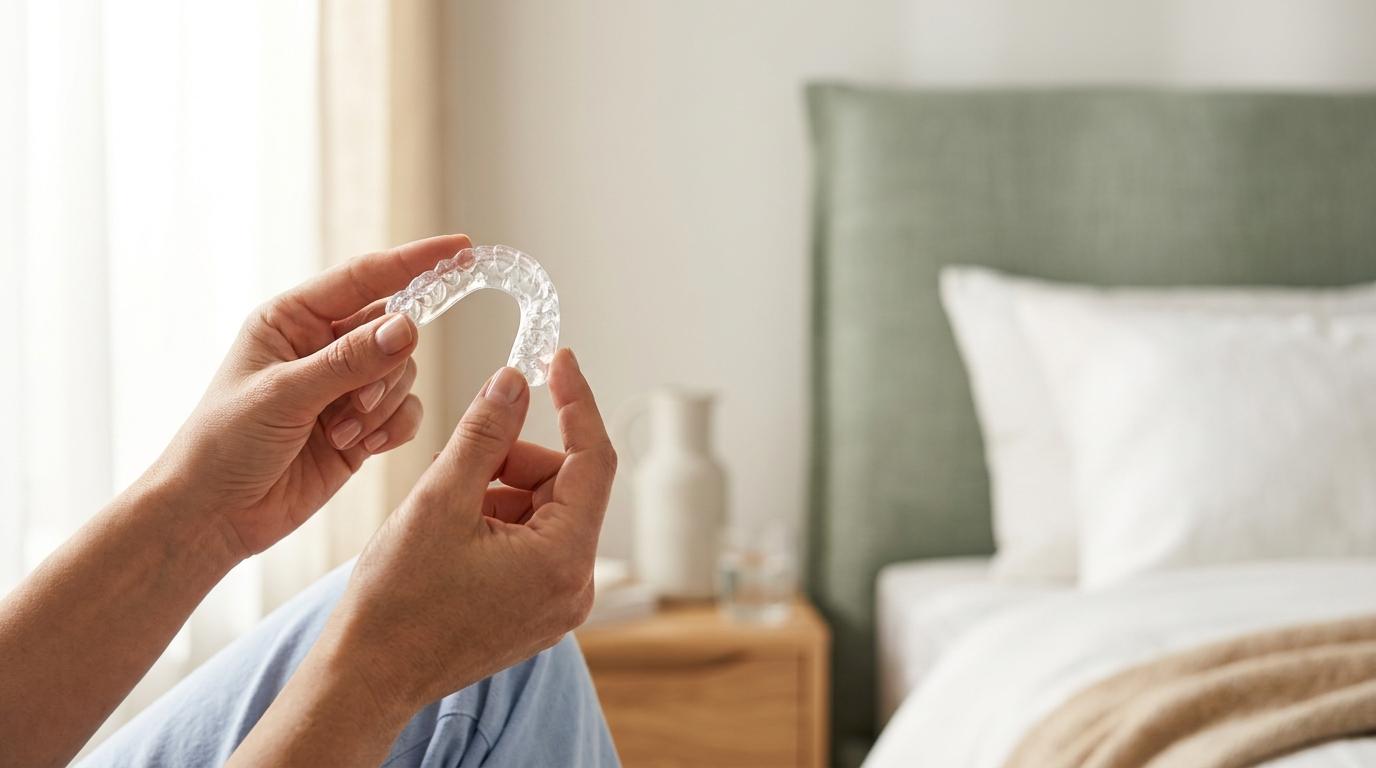
A mandibular advancement splint is a prescription custom-made medical device worn in the mouth used to treat sleep-related breathing disorders including obstructive sleep apnea, snoring, and TMJ disorders. You may also see it called a mandibular advancement device, sleep apnoea oral appliance, or oral airway dilator these are all different names for essentially the same type of device.
Mechanically, it's fairly simple. MADs are worn in the mouth during sleep to hold the mandible and tongue forward and maintain upper airway patency, fitting over the upper and lower teeth and creating forward placement of the lower jaw by approximately 8–10mm. By holding the lower jaw (and the tongue attached to it) slightly forward, the splint helps stop soft tissue at the back of the throat collapsing and vibrating which is what causes the snoring sound and, in sleep apnoea, the airway blockages.
Who a Snoring Splint Suits (and Who It Doesn't)
Mandibular advancement splints aren't a universal fix. They tend to work best for:
People with simple or "primary" snoring who don't have obstructive sleep apnoea (OSA)
People diagnosed with mild to moderate OSA
People who can't tolerate CPAP therapy and are looking for an alternative, under medical guidance
They're generally less suitable for people with severe OSA. These devices are generally more successful at treating mild and moderate sleep apnea and less effective at treating severe sleep apnea. A splint also isn't automatically appropriate for everyone's mouth. Dentists will check for factors that can affect suitability, including older age, obesity and greater neck circumference, increased nasal resistance, a very stiff jaw, and dental conditions such as TMJ disease, periodontal disease, or insufficient teeth to hold the device in place.
Why Sleep Apnoea Needs a Medical Diagnosis First
This is the part we want to be very clear about. A dentist cannot diagnose obstructive sleep apnoea and no reputable Perth dental practice should claim otherwise.
Diagnosis of sleep apnoea can only be done by a Sleep and Respiratory Physician, usually after your GP refers you for a sleep study. If your snoring comes with any of the following, it's a signal to see your GP rather than go straight to a dental splint:
Loud, habitual snoring most nights
Pauses in breathing or gasping/choking during sleep (often noticed by a partner)
Excessive daytime sleepiness, even after a full night in bed
Morning headaches or a dry mouth on waking
Difficulty concentrating, or falling asleep at inappropriate times during the day
You need a diagnosis of sleep apnoea from a healthcare professional, typically confirmed through a sleep study, before any oral appliance is fitted for that purpose. The reason this sequencing matters is that untreated OSA is linked to broader health risks a snoring mouthguard that quietens the noise without addressing underlying apnoea could mask a problem rather than solve it. This is a key difference from choosing a mouthguard for teeth grinding, which doesn't carry the same medical risk if you simply go ahead and get fitted.
Good practice generally looks like: GP assessment → sleep study if indicated → sleep physician's recommendation → then, if appropriate, a dental consultation to discuss a custom splint. Assessment for suitability may require assessment by a sleep specialist, including a sleep study, or a dentist — the two roles work together rather than either one working alone.
Snoring Splint vs Night Guard for Grinding: Not the Same Device
It's easy to assume all "mouthguards" sold by dentists do the same thing, but a snoring splint and a bruxism night guard solve different problems:
| | Snoring/OSA splint (MAS) | Night guard for grinding | |---|---|---| | Purpose | Holds the lower jaw forward to help keep the airway open | Creates a protective barrier between upper and lower teeth | | Who needs one | Snorers, and OSA patients under medical guidance | People who clench or grind (bruxism), often linked to stress or bite issues | | Diagnosis pathway | May need GP/sleep physician input first for OSA | Dentist can usually assess and fit directly |
If grinding rather than snoring is your main concern, our guide to teeth grinding and night guards explains that device and its costs separately. Both devices, however, share one thing in common with any mouth-worn appliance: a proper custom fit matters enormously for comfort and effectiveness, which is also true of custom-fitted sports mouthguards compared with boil-and-bite options. A splint that's jammed in rather than properly moulded to your teeth is less likely to be worn consistently — and consistency is what makes any of these devices useful.
Snoring Splint vs CPAP
CPAP (continuous positive airway pressure) remains the standard treatment for moderate-to-severe OSA, but it isn't the right fit for everyone — some people find the mask uncomfortable or struggle to travel with the machine. This is where a splint sometimes comes in. The American Academy of Sleep Medicine and the American Academy of Dental Sleep Medicine have established mandibular advancement devices as the treatment for snoring in adult patients who do not have obstructive sleep apnea, while for diagnosed OSA, a splint is typically considered an alternative to CPAP for mild-to-moderate cases, or for patients who can't tolerate CPAP — always on the recommendation of the treating sleep physician, not as a self-directed swap.
It's also worth setting expectations: a splint can reduce snoring and improve symptoms, but it is not a guaranteed cure for sleep apnoea, and ongoing review with your sleep physician (including a follow-up sleep study in some cases) is the only reliable way to confirm it's working for you.
What Does a Snoring Mouthguard Cost in Perth?
Pricing varies by clinic, the type of device prescribed, and whether you need dental work done first to create a healthy base for the splint. As an indicative guide only (always confirm current pricing with your dentist):
Custom-made mandibular advancement splints in Perth have been quoted in the vicinity of $1,700 and $2,000, with the severity of obstructive sleep apnoea and the materials used in construction affecting the final price.
Some Perth clinics advertise simpler splint options starting lower, from around $640, though the specification and adjustability of these devices can differ significantly from a fully titratable custom MAS.
Non-custom "boil and bite" trial devices exist at a much lower price point and are sometimes used as a short trial before committing to a custom, dentist-made splint but they aren't a substitute for a properly fitted, prescribed appliance.
Many private health funds offer partial rebates under extras cover for oral appliances it's worth checking your policy before booking.
Because a splint is a dental treatment for what is often a diagnosed medical condition, your dentist will usually also need to check that your teeth and gums are healthy enough to support the device, which may add the cost of an exam or x-rays if you're not already an existing patient. You can read more about custom oral appliances generally on our custom mouthguards treatment page.
What Happens at a Consultation
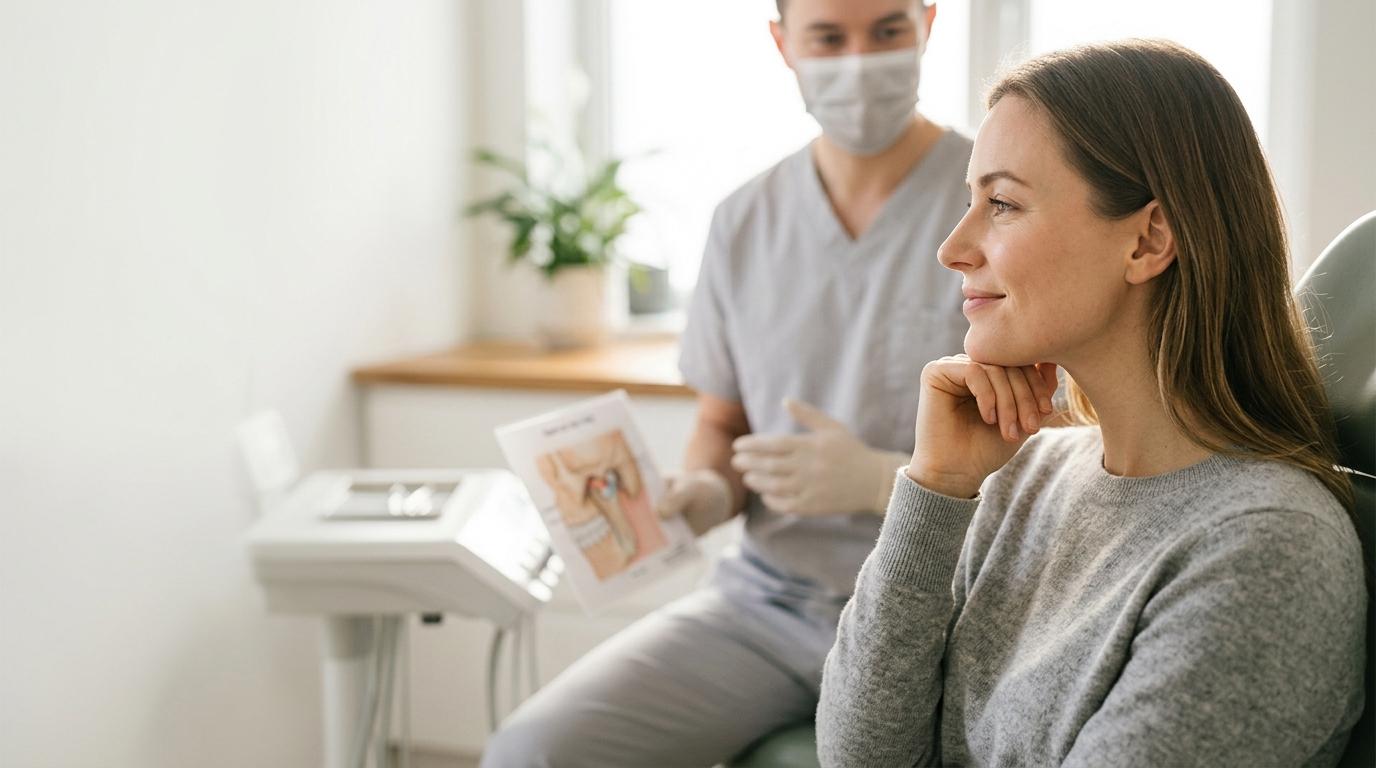
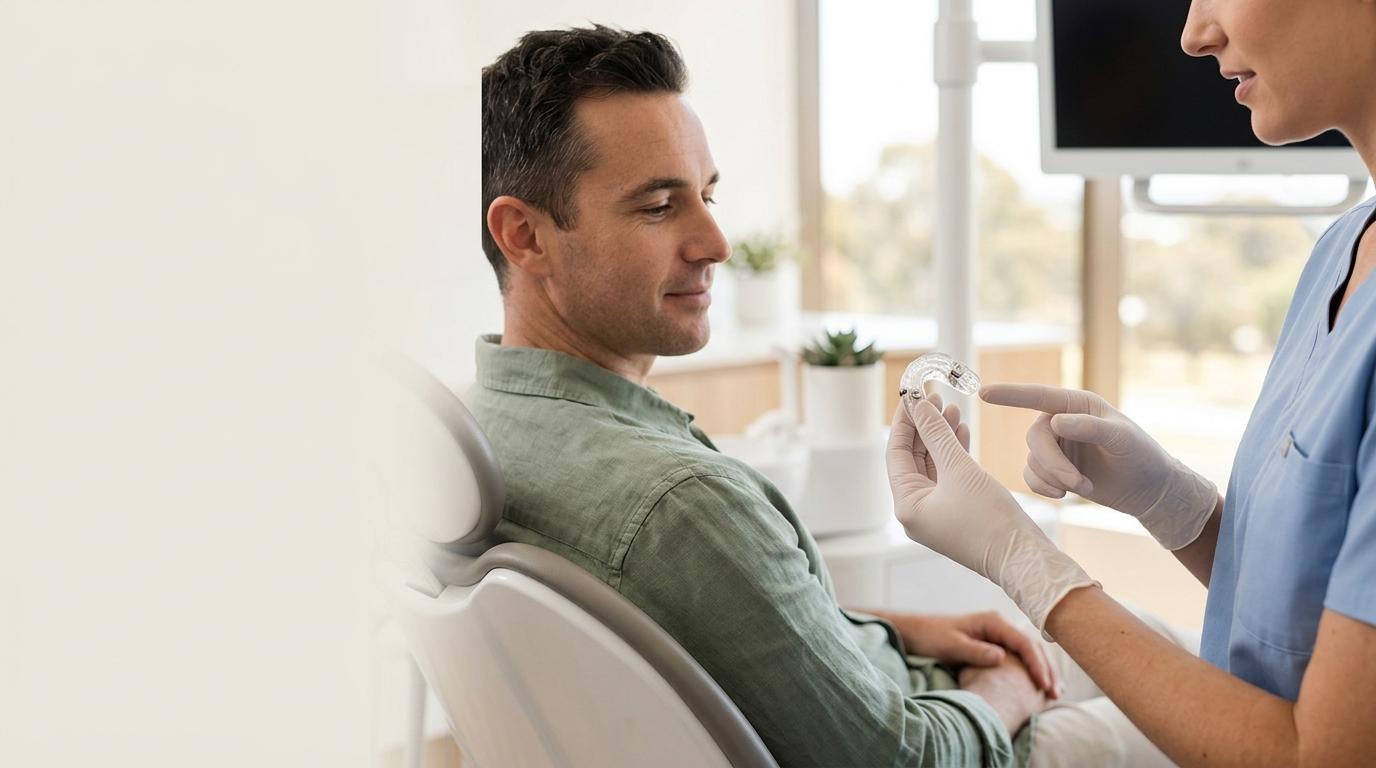
At Two Rocks Dental Care, a snoring-related visit starts like any general dental appointment: a review of your oral health, teeth, gums and jaw. If you mention snoring, the team can talk you through whether a custom splint is worth discussing as one option, and if your symptoms suggest possible sleep apnoea the dentist will recommend you see your GP for assessment and a possible sleep study before any splint is made. This is standard, responsible practice; it is not the same as sedation or sleep dentistry, and Two Rocks Dental Care does not offer either of those services.
Two Rocks Dental Care's broader scope covers general dentistry, wisdom teeth assessment and extractions, and mouthguards and splints, all delivered with an anxiety-free, unhurried approach for patients who feel nervous about the dentist. If jaw discomfort or clenching is part of the picture alongside snoring, it's also worth asking about TMJ treatment, since jaw joint health and splint therapy are often discussed together.
You can find opening hours and location details for the Two Rocks clinic here.
FAQs
Does a mouthguard stop snoring?
It can reduce or quieten snoring for many people by holding the jaw and tongue forward, but results vary by individual, and it isn't guaranteed. In one UK clinical audit of 93 patients fitted with a splint, 44% who previously experienced snoring now reported no snoring and 47% reported less snoring useful context, but not a promise of a particular outcome for every patient.
Is a snoring splint vs CPAP a straight choice?
Not usually. CPAP is the established treatment for moderate-to-severe OSA; a splint is generally considered for primary snoring or mild-to-moderate OSA, or when CPAP isn't tolerated and the decision sits with your sleep physician, not a self-selection between the two.
What's the mandibular advancement splint cost in Perth, roughly?
Indicative pricing for a custom device has been quoted around $1,700 to $2,000, though entry-level options exist from a few hundred dollars, and costs always depend on your individual case and the clinic. Treat any figure as a starting point for discussion, not a quote.
Can I get a custom snoring mouthguard in Australia without a diagnosis?
For straightforward primary snoring without OSA symptoms, some dentists will proceed to a custom device after a dental check. If you have signs suggestive of sleep apnoea, a medical assessment comes first a dentist cannot diagnose OSA themselves.
Is this the same as an anti-snoring device from a pharmacy?
No. Pharmacy or online "boil and bite" devices are a lower-cost, non-custom alternative, sometimes used as a trial. A dentist-made splint is fitted from impressions of your own teeth for a more precise, adjustable fit.
Next Step
If snoring is affecting your sleep or your household's and you don't have red-flag symptoms of sleep apnoea, a conversation with your dentist is a reasonable first step. If you do notice pauses in breathing, gasping, or daytime sleepiness, see your GP first for assessment. Either way, the team at Two Rocks Dental Care can talk through your oral health and whether a custom splint is worth exploring.
Tags