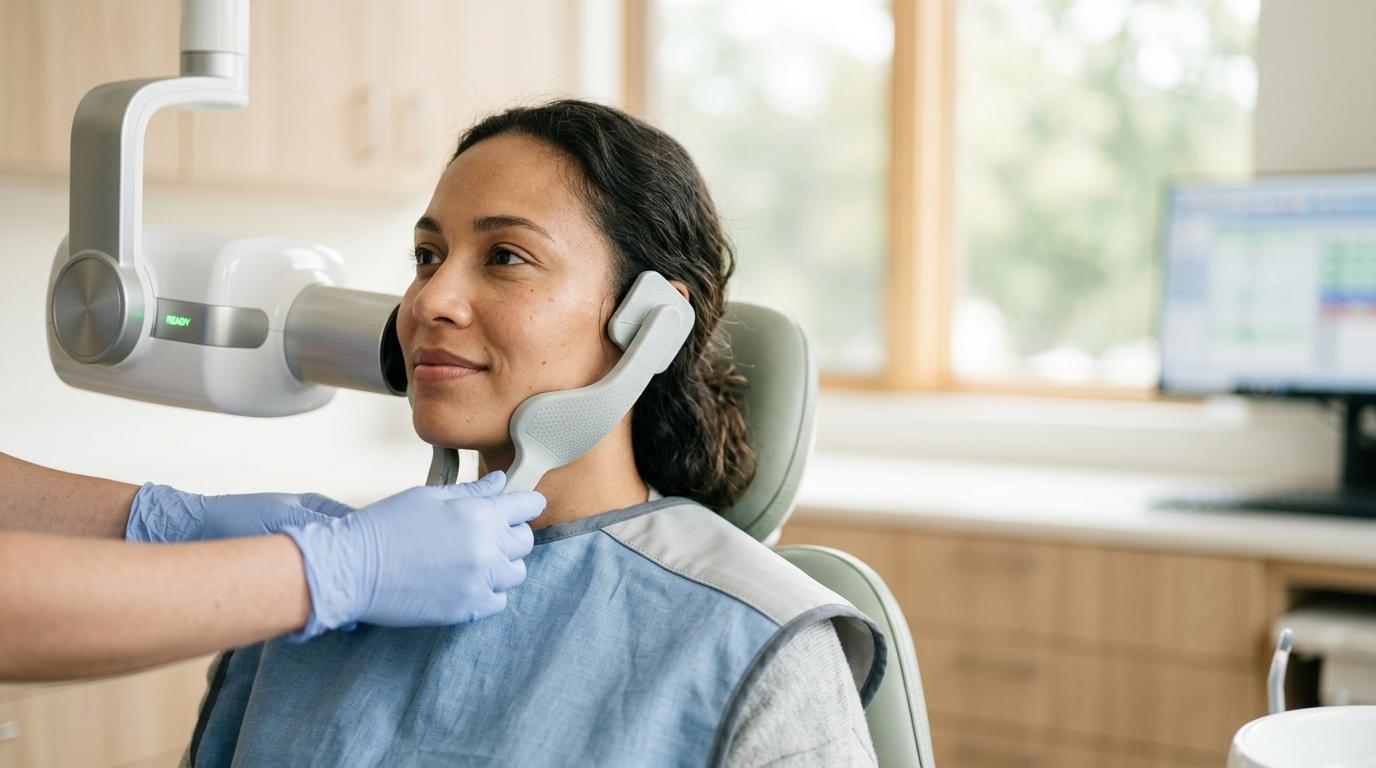
If the thought of "just one more X-ray" is part of why you keep pushing back your dental check-up, you're not alone. Worry about radiation is one of the most common reasons people delay routine care even though, for most patients, a dental X-ray involves a very small amount of exposure. This guide breaks down what the radiation actually amounts to, why your dentist relies on X-rays in the first place, how often you genuinely need them, and the difference between a bitewing and an OPG.
So, Are Dental X-Rays Safe?
In short: yes, for the vast majority of patients. According to Australia's radiation safety authority, ARPANSA, dental imaging such as X-rays are often used as part of general dental examinations or in specialised investigation and diagnosis in dental practice, and any radiation exposure is very low level and unlikely to have health effects.
To put that in context, average background radiation exposure in Australia is around 1.7 millisieverts per year from natural sources. A single dental X-ray sits well below that annual figure comparable to a small slice of the everyday background radiation you're exposed to just living your life, from soil, air, and cosmic rays. ARPANSA has gone as far as partnering with the Australian Dental Association on patient information specifically because so many patients are concerned about radiation exposure from dental X-rays, and radiation exposure from dental imaging is typically very low level, with the risk of negative health effects minimal.
Modern equipment has also reduced exposure further. Digital sensors are more sensitive than old-style film, meaning less radiation is needed to produce a usable image electronic (digital) imaging systems generally require significantly lower exposures than those required for conventional films. That's a key reason clinics investing in digital dentistry can offer diagnostic imaging with less radiation than traditional setups.
It's also worth knowing that protective gear has evolved alongside the technology: in modern dentistry, X-ray doses are so low and well controlled that lead aprons are not usually (or routinely) required.
One note on pregnancy: if there's any chance you're pregnant, always tell your dentist before any X-ray is taken so they can adjust their approach accordingly.
Dental X-Ray Radiation: What's Actually Involved
It helps to understand what dentistry is comparing itself to. Dentistry uses two main ionising radiation modalities x-rays and cone beam computed tomography (CBCT). The standard x-ray bitewing uses very low doses of radiation, with CBCT providing more radiation but still considerably less than general medical CT scans, and because the doses are very low, both patient and occupational risks are very low.
For context on how tightly this is regulated, it's unusual for dental workers who are exposed far more often than any individual patient to exceed the public radiation limit of 1 mSv per year. If staff who work around X-ray equipment daily rarely approach that threshold, an occasional patient scan is a very small contributor to your annual dose.
If you want the full official picture, ARPANSA and the ADA publish a joint patient factsheet comparing dental X-ray doses to everyday exposure situations, including how a scan compares to something as ordinary as a domestic flight. We'd rather point you to that authoritative source than estimate specific numbers ourselves the takeaway across every credible summary is the same: dental X-ray doses are low, and digital imaging has pushed them lower still.
Why Does My Dentist Need X-Rays?
X-rays let your dentist see what's invisible to the naked eye the parts of your teeth and jaw hidden beneath enamel, gum, and bone. Common reasons your dentist might recommend one include:
Decay between teeth that isn't visible during a visual exam, especially in tight contact points
Bone level changes associated with gum disease
Assessing wisdom teeth — including whether they're impacted and how they're positioned relative to nerves and neighbouring teeth (something we cover in detail in our guide to impacted wisdom teeth removal)
Checking under existing fillings or crowns for new decay
Planning treatment such as extractions, root canal therapy, or orthodontics
Investigating pain, swelling, or trauma where the cause isn't visible on the surface
Put simply, an X-ray is a diagnostic tool, not a routine formality dentists use them because they materially change what can be seen, caught early, and treated conservatively.
Bitewing X-Ray vs OPG: What's the Difference?
These two are often confused, but they serve different purposes.
Bitewing X-rays are small, intraoral images taken by biting down on a sensor. They provide a view of the surfaces between the teeth, beneath the surface of the tooth enamel, as well as the level of bone surrounding the teeth making this the most common dental imaging scan. They're the go-to for spotting early decay between back teeth and monitoring bone levels around your gums at routine check-ups.
An OPG (orthopantomogram) is a single panoramic image that captures your entire mouth in one shot. An OPG captures all your teeth, both jaws, the temporomandibular joints (TMJ), surrounding bone and nasal and sinus structures in one image. It's the image dentists reach for when they need the bigger picture assessing wisdom teeth positioning, jaw joint issues, or planning more involved treatment.
The two aren't interchangeable. An OPG is a two-dimensional overview that isn't designed for fine detail of individual teeth, and small cavities between adjacent teeth are better detected on bitewing X-rays. In practice, many patients have both at different points: bitewings at routine check-ups, and an OPG periodically or when something broader needs investigating.
How Often Do You Actually Need Dental X-Rays?
There's no single universal answer it depends on your oral health history, risk of decay or gum disease, and whether you have any symptoms. Someone with a strong track record of healthy check-ups and no history of decay may need bitewings far less often than someone prone to cavities or gum issues.
As a general guide, your dentist will factor X-rays into the same rhythm as your regular check-up and clean visits, rather than taking them at every single appointment regardless of need. If you're unsure how frequently you should be seeing a dentist at all, our guide on how often you should really visit the dentist covers the general recommendations in more detail and the same "as clinically needed, not on autopilot" principle applies to imaging.
If cost is part of your hesitation around getting X-rays done, it's worth reading our breakdown of check-up and clean costs in Perth, which explains what's typically included and how health fund cover applies.
Dental X-Rays for Children
Parents are often more cautious about radiation for kids than for themselves, which is a reasonable instinct. The same principles apply, though: doses used in modern dental imaging are very low, and dentists only recommend X-rays for children when there's a genuine diagnostic reason commonly checking how permanent teeth are developing under baby teeth, spotting early decay in hard-to-see spots, or monitoring jaw growth. Digital sensors, which require less radiation than older film-based systems, are the standard in most modern practices.
Digital X-Rays at Mullaloo Beach Dental
At Mullaloo Beach Dental, digital X-rays are part of everyday general dentistry not an add-on. Because digital imaging captures a usable diagnostic image with less radiation than traditional film, it lets the team assess decay, bone health, and wisdom teeth positioning efficiently as part of your routine visit, with images available to review on-screen straight away.
The clinic also offers same-day emergency appointments, so if you're dealing with sudden pain, a cracked tooth, or swelling, imaging can be part of getting you seen and diagnosed quickly rather than waiting days for answers. Combined with general dentistry services covering check-ups, cleans, fillings, and everyday oral health needs, it's a practical option whether you're due for a routine bitewing or need urgent assessment.
You can learn more about the imaging technology used across the platform on our digital dentistry page.
Put the Worry Aside and Book Your Check-Up
If X-ray concerns have been part of why you've been avoiding the dentist, hopefully this clears things up: the doses involved are low, digital technology has reduced them further, and your dentist only recommends imaging when it genuinely helps your care. Delaying a check-up because of X-ray worries often means small issues get bigger and harder to treat in the meantime.
Book an appointment with Mullaloo Beach Dental today and get your oral health assessed properly, with digital imaging used only where it adds real diagnostic value.
Tags