Short answer: Published research generally points to implant survival in the low-to-high 90s percent at the 10-year mark, with that figure settling somewhere between roughly 80% and the low 90s at 20 years, depending on how a study counts failures. The titanium implant itself tends to outlast the crown on top, which is a separate part that wears, chips or loosens over time and is often replaced at least once. Smoking, uncontrolled diabetes, peri-implantitis and poor home cleaning are the main reasons implants fail early. No dentist can promise a result for your mouth specifically a clinical exam is the only way to get a realistic estimate.
How long do dental implants last, really?
This is the most searched question in implant dentistry, and it's a fair one an implant is a significant investment, and most people want a sense of how many years they're buying.
Long-term studies that pool data across many patients and implant systems estimate 10-year implant survival at around 96%, with a prediction interval of roughly 91.5% to 99.4% across the studies reviewed. When researchers applied a more cautious statistical approach to account for patients lost to follow-up, that estimate dropped to around 93%, with a wider range of about 90% to 96%.
Twenty-year data is thinner and more variable, because far fewer patients stay in a single study for two decades. One pooled analysis of 20-year studies found a mean survival rate of 92% in prospective studies, falling to 78% once missing follow-up data was accounted for, while five retrospective studies covering 1,440 implants showed a survival rate of 88%. The researchers behind that review summarised the practical takeaway as "a remarkable 4 out of 5 implants success rate" over two decades, while stressing the need for long-term follow-up care, since implant failure is multifactorial.
The honest summary: most implants placed by an experienced dentist in a suitable patient are still doing their job after 10 and even 20 years, but the longer the timeframe, the wider and less certain the range becomes.
Do dental implants last forever?
No — and any dentist who says otherwise isn't being accurate. "Survival" in the research only means the implant is still physically in the jaw; it doesn't mean the surrounding gum and bone have been trouble-free the whole time, or that the crown on top hasn't needed attention. Age, bite forces, bone quality, implant position, smoking status and how well the site is cleaned every day all influence how long any individual implant lasts. A written assessment at Hocking Dental Care after an exam is the only reliable way to get a personal estimate, and even then, no outcome can be guaranteed.
What's the difference between the implant and the crown on top?
This distinction matters more than most patients realise, and it explains why "my implant lasted 15 years" and "my crown lasted 15 years" are two different claims.
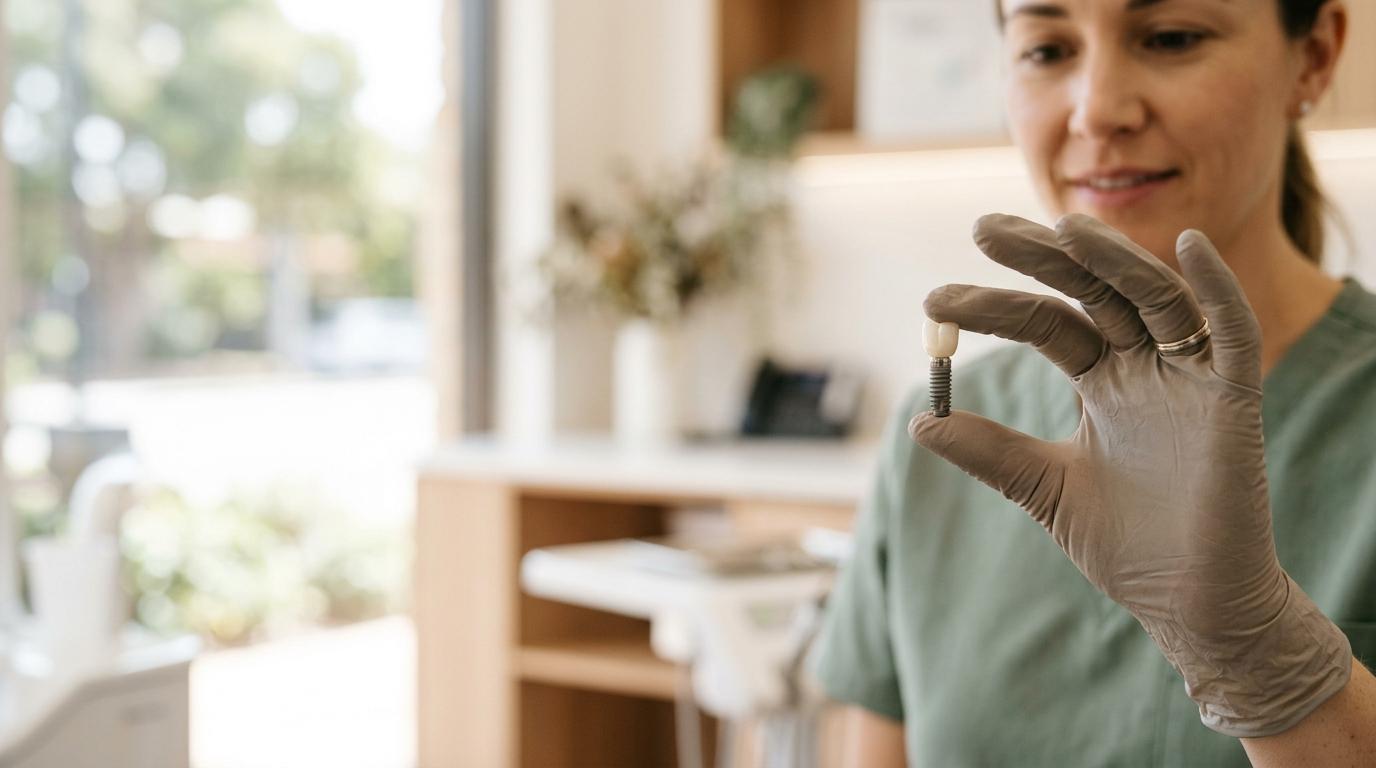
The implant is the titanium (or zirconia) post anchored in the jawbone. It fuses with the bone through osseointegration and, once stable, tends to be the most durable part of the whole restoration.
The crown is the visible tooth-shaped part cemented or screwed onto the implant. It's exposed to chewing forces, grinding, staining and everyday wear, much like a natural tooth except it can't repair itself.
Crowns on implants commonly need replacement before the implant underneath does, due to chipping, wear, loosening of the retaining screw, or simply because materials and fit have moved on. If you're comparing materials for either part, our guide on zirconia versus titanium dental implants covers how each performs over time. If you're assessing a single missing tooth specifically, see single tooth implant cost and what to expect in Perth.
What does "dental implant success rate" actually mean?
Success and survival aren't the same thing, and the research is clear on this point. An implant can technically "survive" stay in the mouth while still having some bone loss, gum inflammation or a prosthetic problem that needs managing. Stricter success criteria generally require the absence of pain, mobility, infection, ongoing bone loss and unresolved restoration issues, which is a higher bar than survival alone.
That's also why maintenance matters so much. One large systematic review found patient-level prevalence rates for peri-implant mucositis and peri-implantitis of 46% and 21% respectively, with weighted mean incidence rates of 53% for mucositis and 22% for peri-implantitis within 20 years of function. In plain terms, inflammatory problems around implants are common enough that regular review appointments aren't optional extras.
What causes dental implant failure?
Implant failure is rarely random. Research consistently points to a handful of recurring, mostly preventable causes.
Smoking. An umbrella review of meta-analyses found that cigarette smoking was graded as a highly suggestive risk factor for peri-implantitis, with a relative risk of around 2.07. Smoking slows healing and reduces blood supply to the gum and bone around the implant, which raises both early and late failure risk.
Uncontrolled diabetes. Diabetes is one of the most consistently reported risk indicators for peri-implant disease. One meta-analysis found diabetic patients had 2.31 times greater odds of developing peri-implantitis, and poor glycaemic control appears to matter specifically research has found that higher glycaemic levels, such as an HbA1c above 8%, were associated with a greater prevalence of peri-implantitis. If diabetes management is a factor for you, our article on diabetes and gum disease — the two-way link explains why blood sugar control and gum health affect each other.
Peri-implantitis. This is inflammation and progressive bone loss around an implant, caused by a bacterial biofilm similar to the plaque that causes gum disease around natural teeth. A history of gum disease is itself a major risk factor — an umbrella review found periodontitis was also graded as a highly suggestive risk factor, with an odds ratio around 3.84. If you've had receding gums or bleeding gums in the past, it's worth reading the stages of gum disease and what to do about receding gums before implant treatment, and our gum disease treatment page if you suspect you currently have active disease.
Poor cleaning and skipped reviews. Plaque control around an implant is just as important as it is around a natural tooth arguably more so, because implants don't have the same defence mechanisms as a natural root. Reviews consistently link good plaque control skills and continual regular maintenance recalls to lower rates of both peri-implant mucositis and peri-implantitis.
How is peri-implantitis different from ordinary gum disease?
The disease process is similar — bacterial biofilm triggers inflammation that can progress to bone loss but it's happening around a titanium post rather than a natural tooth root, which changes how it's detected and treated. Peri-implant mucositis (inflammation confined to the gum) is considered the precursor stage, and if untreated it can progress to peri-implantitis, where the bone supporting the implant starts to resorb. Regular professional checks, which include measuring gum pockets around the implant and reviewing x-rays, are how this is usually caught early.
How much does implant and crown work cost in Perth?
Costs vary a lot depending on the case, so every figure below is a guide only a written quote always follows a proper exam.
Industry guides summarising recent Australian Dental Association fee survey data report implant component fees commonly ranging from about $2,603 at the low end to $7,305 at the high end for a single implant, with a realistic all-up estimate for a single dental implant, including the crown and related procedures, often landing around $6,000 to $9,000. Replacing just the crown on an existing, healthy implant is typically less than starting from scratch, though the exact fee depends on the material and the state of the implant underneath. For routine check-ups, a standard exam, clean and fluoride treatment combination is around $229 on average nationally, based on ADA item numbers 012, 114 and 121 useful context for budgeting the ongoing reviews that protect your implant long term. For a fuller cost breakdown and how the treatment process works from consultation to final crown, see our Perth implant cost guide.
How can I help my dental implants last longer?
Brush and clean around the implant daily, including interdental brushes or floss designed for implants
Attend scheduled hygiene reviews so early inflammation is caught before it becomes peri-implantitis
If you smoke, reducing or quitting particularly around the time of placement measurably lowers risk
Keep diabetes well controlled, since glycaemic control is linked to peri-implant outcomes
Mention teeth grinding to your dentist, since unmanaged bite forces can affect both the crown and the implant
Don't skip x-rays when recommended; they're how bone levels around the implant are actually checked
Where can I get my implants assessed in Perth?
Hocking Dental Care, located in Perth's northern suburbs, provides general and family dentistry, check-ups and cleans, children's dentistry, implants, crowns, root canal treatment, wisdom teeth removal, Invisalign, dentures, sleep dentistry and laser dentistry. Whether you're considering a first implant, want a second opinion on an existing one, or you've noticed a crown feels loose or worn, a clinical exam at Hocking Dental Care is the starting point for an honest, individual assessment. You can read more about the dental implants treatment offered, or go ahead and book an appointment online.
FAQ
Do dental implants last forever?
No. While the titanium post can last decades for many patients, research doesn't support a "forever" claim for any implant, and the crown on top generally needs replacing before the implant does.
What's the difference between implant survival and implant success?
Survival simply means the implant is still in place. Success is a stricter standard requiring no pain, mobility, infection, significant bone loss or unresolved prosthetic problems an implant can survive without meeting every success criterion.
Is peri-implantitis reversible?
Early-stage inflammation confined to the gum (peri-implant mucositis) can often be managed with improved cleaning and professional care. Once bone loss has started (peri-implantitis), treatment becomes more involved, which is why early detection through regular reviews matters.
Can smokers still get dental implants?
Many smokers do have implants placed, but research links smoking to higher rates of peri-implantitis and implant failure, so your dentist will discuss the added risk and may suggest reducing or pausing smoking around surgery.
How often should I have my implants checked?
This depends on your individual risk factors and your dentist's recommendation, but regular hygiene visits and periodic x-rays are generally part of long-term implant maintenance.
Does diabetes rule out getting an implant?
Not necessarily — many people with well-controlled diabetes have successful implants. Research links poorer blood sugar control specifically to higher peri-implantitis risk, so your dentist and GP managing your diabetes together is a sensible approach before and after treatment.