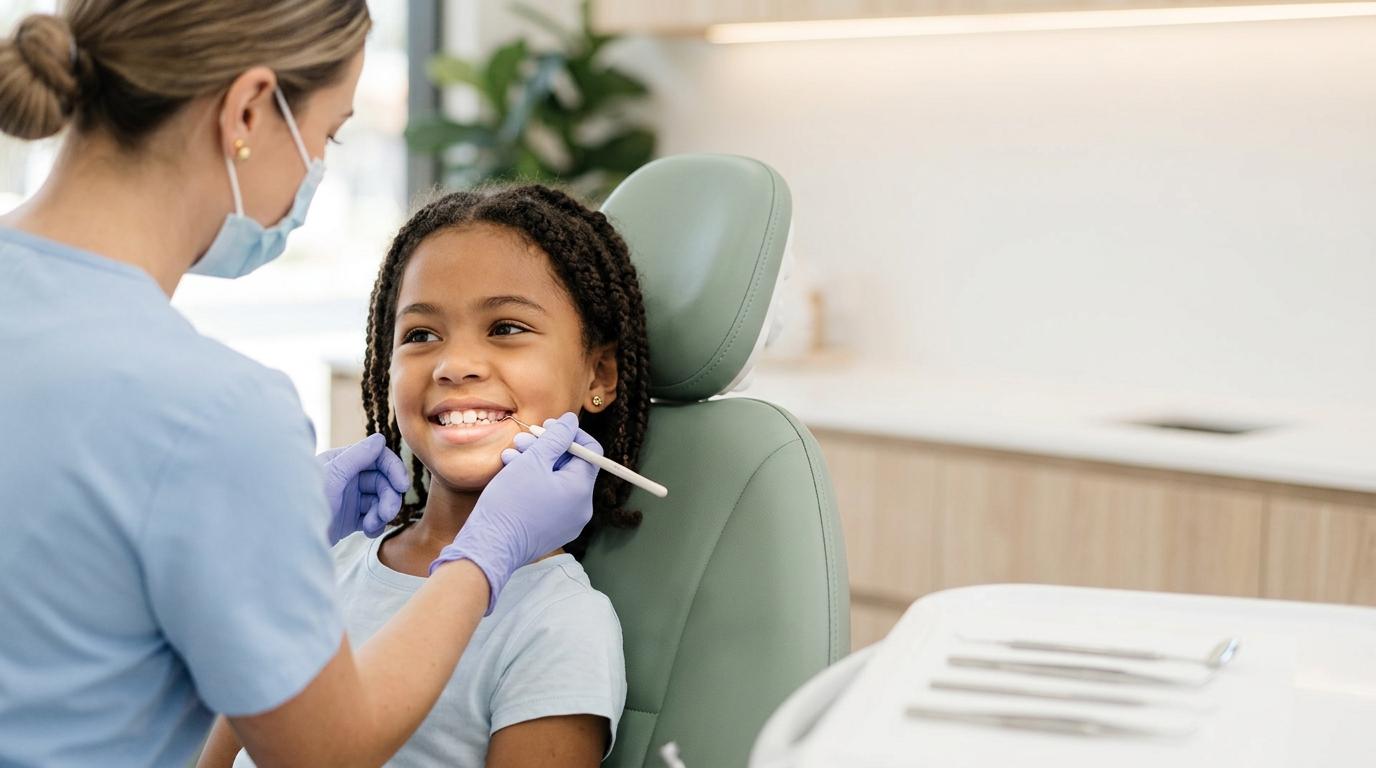
If your child's first permanent molars have come through, or you've just had a check-up and the dentist mentioned "sealants," you're probably wondering what they actually are, whether they're worth paying for, and how much they cost here in Perth. This guide walks through exactly that with indicative local pricing and how fissure sealants fit alongside the Child Dental Benefits Schedule (CDBS).
It's a timely question for many WA families using the spring school holidays to catch up on overdue check-ups before the end of the school year.
What Are Fissure Sealants?
A fissure sealant is a thin, tooth-coloured (or clear) resin coating that a dentist paints into the natural grooves on the chewing surface of a back tooth. Fissure sealant is a tooth-coloured liquid applied on the chewing surface of adult molar teeth to prevent cavities from forming in early years. Once set, it forms a smooth, sealed layer over the pits and fissures where a toothbrush bristle often can't quite reach.
It's not a filling no decay needs to be present, and no drilling is involved. It's purely preventive.
How Sealants Protect Back Teeth From Decay
Molars and premolars have naturally deep grooves on their biting surfaces. These areas, particularly on molar teeth, can be challenging to clean with toothbrush bristles and are prone to developing cavities. Food particles and plaque bacteria settle into these grooves, and over time that's where a large share of childhood cavities start.
By filling in those grooves, the sealant covers the deep pits and grooves of the teeth, protecting them from harmful bacterial plaque, which may cause tooth decay. The tooth surface becomes smoother and easier to clean with normal brushing.
It's worth being realistic, though: a sealant only protects the surface it covers. The sealant fills the pits and grooves of molars and premolars so the tooth is not impervious to decay and bacteria. Sealants work with good brushing, fluoride and regular dental visits they don't replace any of them.
Which Teeth Get Sealed, and Which Ages Benefit Most?
While any tooth with pits and fissures can benefit from sealants, like lateral incisors, the back teeth (the molars and premolars) are most commonly fissure sealed, because back teeth have deeper grooves and are used mostly for chewing, making them more susceptible to decay.
In practice, this means two key windows tend to come up at check-ups:
Around age 6–7, when the first permanent molars erupt behind the baby teeth.
Around age 11–13, when the second permanent molars (and premolars) come through.
Sealants can also be considered for older children, teens, or even adults with deep, decay-prone grooves — it isn't strictly limited to one age group. If you're after a broader overview of age-by-age dental care, our parent's guide to children's dentistry in Perth's northern suburbs covers the bigger picture; this article is deliberately focused on the sealant procedure itself.
What Happens at a Fissure Sealant Appointment
A sealant appointment is short, simple and generally very well tolerated by kids. It's often done as part of a routine check-up and clean rather than as a separate visit. Typically it involves:
Clean and dry the tooth – the chewing surface is cleaned and isolated to keep it dry.
Etch the surface – a mild etching gel is applied briefly to help the sealant bond, then rinsed off.
Dry again – the tooth is dried and kept isolated so moisture doesn't interfere with bonding.
Apply the sealant – the resin is painted into the grooves with a small brush.
Cure the sealant – a curing light hardens the material in seconds.
Check the bite – the dentist checks the sealant feels comfortable and doesn't sit too high.
It's a painless and inexpensive procedure — the process is usually quick and straightforward, taking only a few minutes for each tooth and no anaesthetic required. Most children manage it comfortably without any local anaesthetic or drilling.
Fissure Sealants Cost in Perth (Indicative Only)
Dental fees in Australia aren't regulated, so prices vary between clinics, and the figures below are indicative only always confirm current pricing at your specific appointment. Based on typical Perth and Australia-wide pricing, fissure sealants commonly sit somewhere in the following range:
Per tooth: roughly $40–$90 is a common Perth range, with some clinics as low as $30 or as high as around $100 depending on the tooth and case. The cost of fissure sealant treatment in Australia can range from around AUD $40 to $100 per tooth.
Multiple molars: since most children have four permanent molars suited to sealants, if all four molars are treated at the average cost of $61 per tooth, the total would be about $244 though this will vary by clinic and by how many teeth actually need sealing.
Pricing can also depend on whether it's done alongside a check-up and clean, and whether any extra time is needed if a groove is deep or stained.
For comparison on general dental pricing in Perth, our guide on dental check-up and clean costs breaks down what you'll typically pay and how health fund cover works alongside out-of-pocket costs.
Does CDBS Cover Fissure Sealants?
Fissure sealants are commonly claimable under the Child Dental Benefits Schedule. The scheme's own guidance lists fissure sealing as an eligible item, alongside exams, x-rays, cleans and fillings. The CDBS is a program for eligible children that provides up to $1,158 in benefits (the benefit cap) over a relevant two calendar year period for basic dental services, and services that receive a benefit under the program include examinations, x-rays, cleaning, fissure sealing, fillings, root canals, extractions and partial dentures.
The specific item numbers cover fissure and tooth-surface sealing per tooth, with separate rates for the first few services on a day versus subsequent ones on the same visit sealing of non-carious pits, fissures, smooth surfaces or cracks in a tooth with an adhesive material, with any preparation prior to application of the sealant included in this item number, limited to four per day, with additional fissure sealing on the same day billed under a separate item.
That said, eligibility and exact benefit amounts depend on your family's circumstances and current Medicare settings. We'd always recommend confirming your child's current CDBS eligibility and coverage directly with Services Australia before your appointment, rather than assuming it will fully cover the visit.
Sealants vs Fluoride: What's the Difference?
These two preventive measures do different jobs, and ideally your child gets both:
Fluoride strengthens the enamel across the whole tooth surface, making it more resistant to acid attack everywhere tops, sides, between teeth.
Sealants physically block the deep grooves on chewing surfaces where fluoride and a toothbrush struggle to reach fully.
Neither one replaces the other, and neither replaces brushing twice a day or regular professional check-ups. They're complementary layers of protection, not substitutes.
How Long Do Fissure Sealants Last?
Fissure sealants last several years but may need to be reapplied over time. Longevity depends on the child's bite, diet and how well the sealant was bonded, so it's worth having sealants checked at each routine visit your dentist can spot early wear or chipping and top up if needed, well before it becomes a decay risk. This is one more reason regular check-ups matter even after sealants are placed; our article on how often you should really visit the dentist explains how often that should be.
Are Fissure Sealants Worth It?
For most children with deep-grooved molars, sealants are a low-cost, low-risk, evidence-backed way to reduce decay risk in exactly the spot where a lot of childhood cavities start. They're quick, comfortable and relative to the cost of a filling later genuinely good value.
But it's worth staying balanced: sealants reduce risk, they don't eliminate it. A sealed tooth with poor brushing and a diet high in sugary snacks and drinks can still decay around the edges of the sealant or on other surfaces. Sealants work best as part of a complete routine brushing, fluoride, sensible snacking, and regular check-ups not as a stand-alone fix.
Book Fissure Sealants in Perth's Northern Suburbs
For families in Perth's northern suburbs, Hocking Dental Care offers general and family dentistry, including children's dentistry, check-ups and cleans, and laser dentistry, in a relaxed setting suited to young patients. You can view the clinic's details and location via Hocking Dental Care's clinic profile.
If your child is due for their next check-up, or you've noticed newly erupted molars and want them assessed for sealants, book online in a couple of minutes at dentalappointments.com.au/book.
FAQs
Does CDBS cover fissure sealants?
Fissure sealants are listed as an eligible item under the CDBS, commonly claimable for eligible children. Always confirm your family's current eligibility and benefit cap with Services Australia before booking.
How long do fissure sealants last?
Typically several years, though this varies by child. They should be checked at regular dental visits and topped up if worn.
Are fissure sealants worth it?
For children with deep molar grooves, yes they're a low-cost preventive step that reduces (but doesn't eliminate) decay risk in hard-to-clean areas.
Sealants vs fluoride do I need both?
Yes, ideally. Fluoride strengthens enamel broadly; sealants physically block deep grooves. They work together, not as alternatives.
What do fissure sealants cost in Perth?
Indicative pricing is commonly in the $40–$90 per tooth range, though this varies by clinic and case always confirm current pricing when booking.
Tags