Short answer: Receding gums don't grow back on their own, so the goal is to stop the cause first – brushing technique, grinding, or gum disease then decide if a graft is worth it. Non-surgical care (a proper clean, a night guard, or gentle laser treatment) manages most mild to moderate cases. Gum graft surgery, done by a periodontist, generally costs $600–$1,500 per tooth or $800–$1,400 per quadrant as a rough guide, with your exact fee confirmed in a written quote after an exam.
Why do gums recede in the first place?
Gum recession is rarely one single thing. The most common drivers are brushing too hard with a stiff brush, grinding or clenching at night, gum disease that has broken down the supporting tissue, naturally thin gum tissue, and teeth that sit slightly outside the jaw line. We've covered the broader picture of how this fits into gum disease progression in our guide to the stages of gum disease and what to do about receding gums, but that article doesn't go into the surgical option or price – which is exactly what this one is for.
If bleeding gums are part of your picture, it's worth understanding that connection too. Our article on what bleeding gums mean and how gum disease is treated in Perth explains how inflammation and infection can quietly pull gum tissue away from the tooth over months or years.
What can be done without surgery?
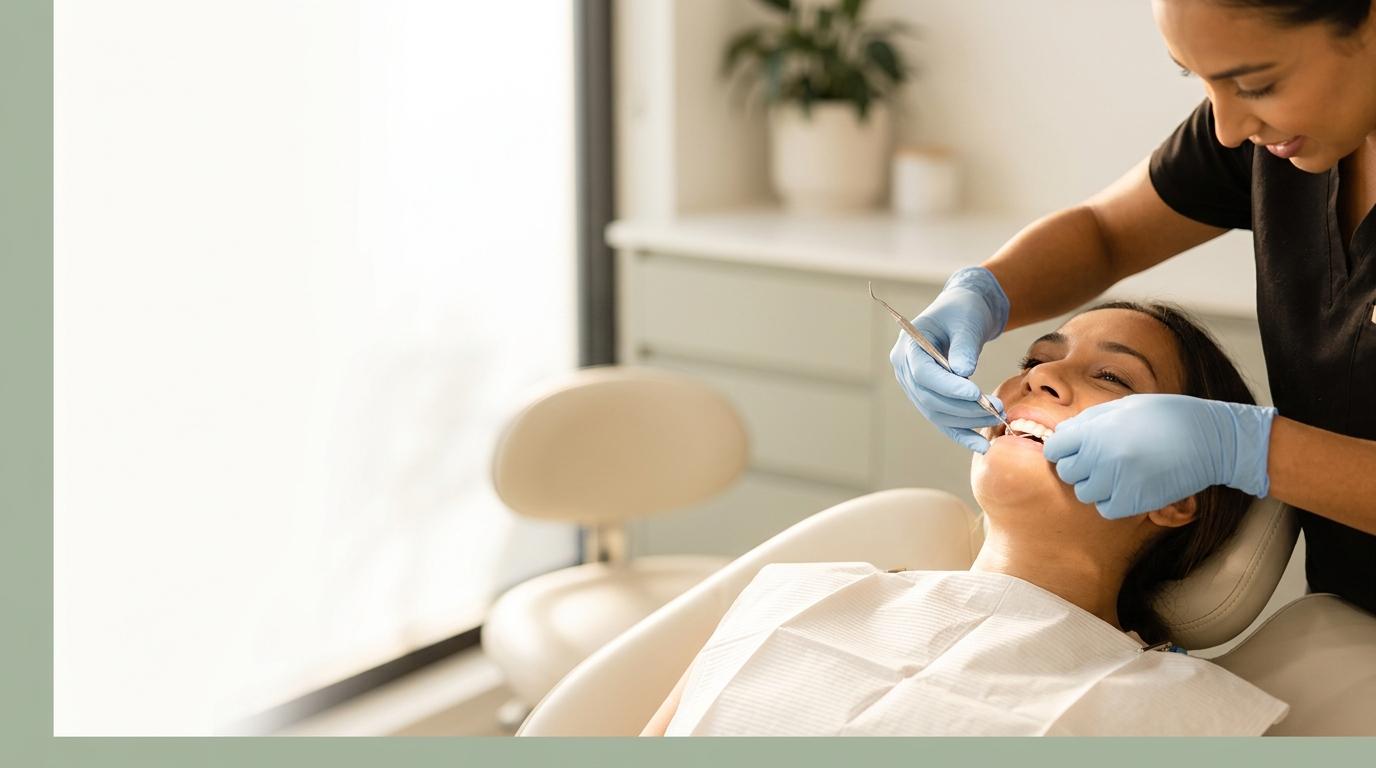
For most people with mild to moderate recession, the first step isn't surgery at all it's working out what's causing it and stopping that cause. A dentist will typically:
Check your brushing technique and recommend a soft brush and gentler pressure
Assess for grinding or clenching and discuss a night guard if needed
Treat any active gum disease with a proper clean, sometimes called scaling and root planing our piece on deep teeth cleaning cost in Perth explains what that involves and what it costs
Use laser dentistry in some cases to gently treat inflamed gum tissue with less bleeding and discomfort than traditional instruments – see laser dentistry in Perth: what it is and how it helps
Apply a desensitising treatment if the exposed root is sensitive to hot, cold, or sweet if that's your main complaint, our guide to why teeth become sensitive and what helps is worth a read
None of this regrows gum tissue, but it can slow or stop further recession, which matters more than most people realise.
When is a gum graft actually the answer?
A graft tends to come into the conversation when recession is clearly getting worse over time, the exposed root is causing ongoing sensitivity or looks like it's at risk of decay, or the recession is deep enough that a dentist is concerned about the long-term support of the tooth. A specialist periodontist will weigh how much gum tissue is left, how quickly it's changing, and what's driving it before recommending surgery.
It's important to be upfront here: gum grafting is a surgical procedure typically carried out by a periodontist, not something done as part of a routine dental visit. A general dentist's role is usually assessment, non-surgical management, and if your case needs it a referral to a specialist who performs the surgery.
What does gum grafting involve, and how much does it cost?
A gum graft is usually a day procedure done under local anaesthetic. It typically involves administering a local anaesthetic to numb the area, removing a small piece of gum tissue from the palate or another source, and placing the graft onto the exposed root surface. Depending on the technique, tissue may come from the roof of your mouth, a donor source, or a processed graft material your periodontist will recommend what suits your case.
On cost: pricing varies a lot depending on the technique, the number of teeth involved, and whether it's done by a general dentist or a specialist. As a rough guide for Australia:
A soft tissue gum graft is often quoted in the range of $1,200–$2,200 per site, while periodontal flap surgery runs closer to $800–$1,400 per quadrant, with bone grafting or guided tissue regeneration adding roughly $1,500–$2,500 on top where it's needed.
Other Australian sources put straightforward gum grafting at $600–$1,500 per tooth on the lower end, rising toward $2,000–$3,500+ per tooth for more complex connective tissue or free gingival grafting.
A specialist periodontal consultation – the exam, charting, and treatment plan before any surgery – generally costs $190–$450, and a specialist tends to charge 40–50% more than general dentist rates across the board.
The Australian Dental Association maintains a national Schedule of Dental Services and Glossary that gives periodontal surgery and gum grafting their own item categories, separate from a standard scale and clean. The ADA Schedule and Glossary is recognised as the definitive coding system of dental items and clinical procedures in Australia, which is why item numbers not a flat national price are what your health fund will actually check against when calculating any rebate.
Every figure above is a guide only. The real number for your mouth depends on how many teeth are involved, the graft method used, and who performs it a written quote follows a clinical exam, not before.
A note on private health insurance: adult dental care is not covered by Medicare in Australia, and there is no MBS item for a scale and clean, scaling and root planing, or periodontal surgery. Major dental, which includes periodontal surgery and grafting, is usually covered at 50 to 60 percent with a separate and often lower limit, and commonly carries a 12 month waiting period. It's worth checking your policy before you commit to anything.
Gum graft recovery
Recovery is usually fairly gentle compared to what the word "surgery" suggests. Most people start to feel back to normal within a week or two, though full healing can take a few weeks to a couple of months depending on how extensive the grafting was, and you'll likely need soft foods and to avoid brushing near the area at first. Whatever caused the recession in the first place – hard brushing, grinding, or gum disease needs to be addressed as well, or the new tissue is at risk of receding again over time.
Can receding gums grow back on their own?
No. Receding gums can't grow back, but you can take steps to prevent gum recession from worsening. Gum tissue simply doesn't regenerate the way skin does after a cut once it has pulled back from the tooth, that position becomes the new baseline. This is exactly why the emphasis in non-surgical care is on stopping the cause rather than hoping the tissue will reappear, and why a graft is the only option that actually restores coverage over an exposed root.
What happens if receding gums are left alone?
Left untreated, recession tends to be a one-way street. Left untreated, gum recession can lead to other serious oral health problems, such as bone loss, tooth mobility or feeling "wiggly" or even tooth loss. Along the way, the exposed root surface is also more prone to sensitivity and decay, since it isn't protected by enamel. None of this happens overnight, but it's a reasonable argument for getting an assessment sooner rather than waiting to see what happens.
What we do at Hocking Dental Care
At Hocking Dental Care, our role with receding gums is assessment, cause-finding, and non-surgical management – general and family dentistry, thorough check-ups and cleans, gentle care for kids, and laser dentistry for suitable cases of gum treatment. We don't perform gum graft surgery ourselves; where recession is advanced or progressing despite non-surgical care, we'll refer you to a periodontist with a clear explanation of why. You can read more about our approach to gum disease treatment and laser dentistry on our treatment pages.
If you've noticed a tooth looking longer, a notch at the gum line, or sensitivity that wasn't there before, the sensible next step is a proper assessment rather than guessing. Book an appointment with the Hocking Dental Care team and we'll work out what's driving it and what, if anything, needs doing next.
FAQ
How much does a gum graft cost in Australia?
As a guide, expect somewhere between roughly $600 and $3,500 per tooth or per site depending on the technique, with periodontal flap surgery often quoted per quadrant at $800–$1,400. Your periodontist will give you an exact written quote after examining your gums.
Does private health insurance cover gum grafting?
It may partially cover it under major dental extras, often at 50–60%, but usually only after a 12-month waiting period and within an annual limit. Check with your fund before booking.
Can receding gums grow back without a graft?
No. Gum tissue that has receded doesn't regenerate on its own. Non-surgical care can stop it getting worse, but a graft is the only way to physically restore coverage over an exposed root.
Is a gum graft painful?
It's done under local anaesthetic, so the procedure itself shouldn't hurt. Most people feel some tenderness for a week or two afterwards, with full healing taking longer.
Will Hocking Dental Care perform my gum graft?
No – gum grafting is a surgical procedure usually carried out by a periodontist. Our team assesses your gums, manages non-surgical care, and refers you to a specialist if surgery looks like the right next step.
What can I do right now to stop my gums receding further?
Switch to a soft brush with gentle technique, get any grinding assessed for a night guard, and have active gum disease treated. Addressing the cause matters more for the long run than the graft itself.